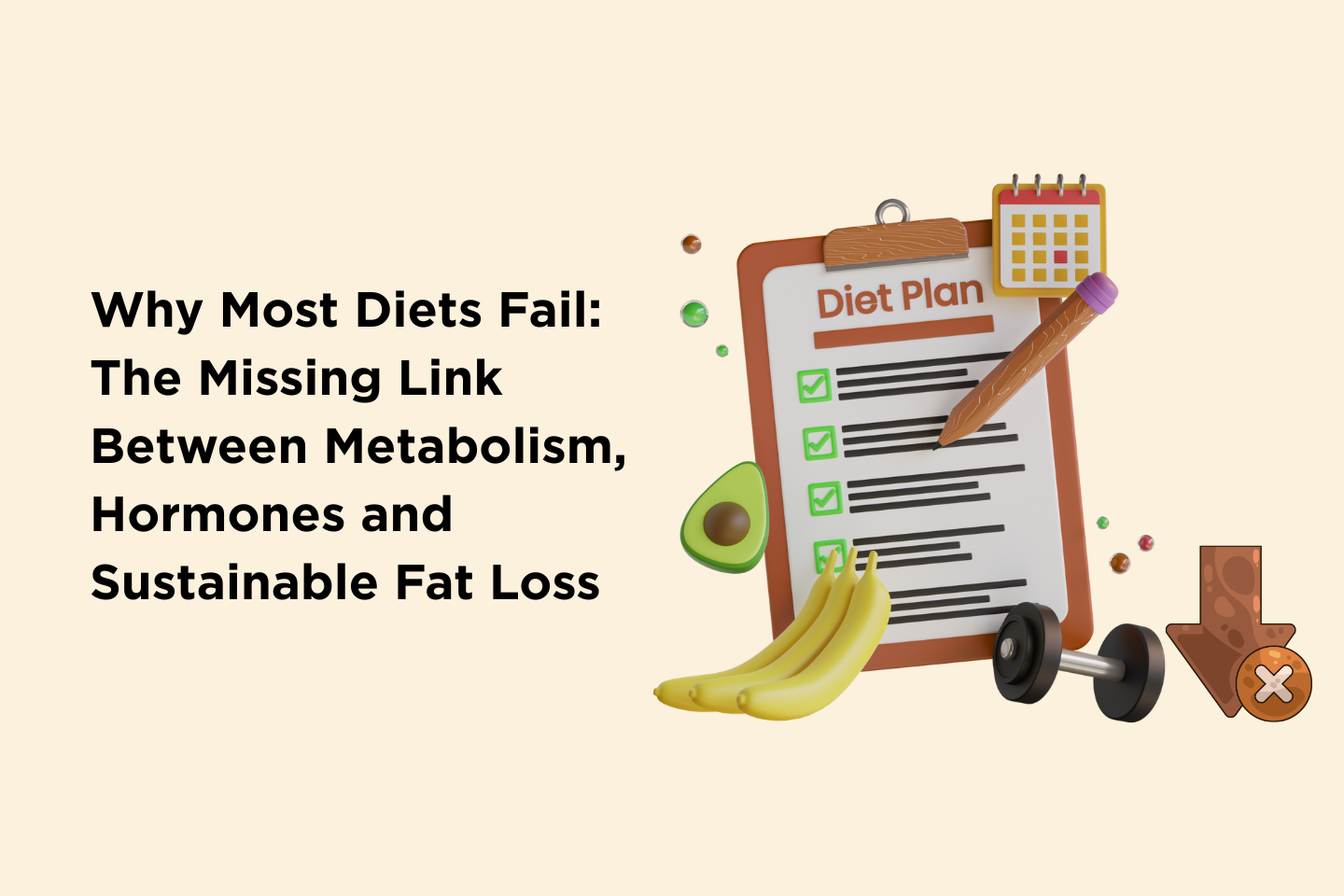
For many people, dieting feels like a loop. You start with motivation, lose some weight very quickly, start slipping back and end up more frustrated than before. This happens because most diets teach only one part of the story. They talk about what to eat.
But that isn’t the whole story. Real, lasting fat loss depends on how your body works.
Once you understand your metabolism, hormones and daily habits together, the process becomes clearer and far more achievable.
We have all seen dramatic promises. Lose 5 kgs in 10 days. Cut carbs, sugar, junk for fast results. Follow this exact plan for a ‘perfect’ body. The problem is that these approaches are built on restriction, short timelines and unrealistic expectations.
Most quick diets do three things that work against you:
At first, you might lose weight because you are eating less. After a while, your body reacts. Hunger rises, cravings increase, energy drops, and motivation fades. This is not failure. It is biology. Your body is designed to protect you, so when it senses scarcity, it slows down to help you survive.
Calories matter, but they are not the whole picture. If weight loss worked on numbers alone, every tracking app would have solved the problem years ago.
Your body is not a calculator. It is a system with many moving parts. Stress, sleep, gut health, activity levels and hormones all influence how the food you eat is used.
A few key points help explain why counting calories often falls short:
Energy balance is real, but it is not the full explanation for why people gain or lose fat. When you look only at calories, you ignore everything happening underneath.
Your metabolism is like the engine that powers everything inside you. When you follow extreme diets or inconsistent meal patterns, that engine weakens.
Your metabolism adapts to protect you. If you consistently eat too little, your body learns to function on less. This makes fat loss harder and often leads to a rebound once you return to normal eating.
Muscle also plays a major role. The more muscle you have, the more energy you burn at rest. Strict diets often cause muscle loss, which lowers your daily calorie burn even further.
Food timing matters as well. Skipping meals or eating erratically can cause blood sugar swings, stronger cravings and slower progress. A healthy metabolism thrives on nourishment and consistency, not restriction.
Hormones quietly control almost every part of your fat loss journey. They influence hunger, cravings, mood, digestion, sleep and how your body stores fat. When a diet ignores hormones, results stall or disappear.
A quick look at the major ones:
Insulin-When it stays too high because of stress or irregular meals, fat loss becomes difficult.
Cortisol-If it stays elevated, your body may hold onto fat, and your cravings can become stronger.
Ghrelin and leptin-Restrictive dieting often disrupts both, which means you feel hungrier and less satisfied.
Thyroid hormones-Under eating, poor sleep and high stress can reduce thyroid function.When hormones are not balanced, even a perfect-looking plan will not deliver consistent results. This is why personalised guidance is so powerful.
Real fat loss doesn’t come from DIETING. It does not require punishing rules or massive sacrifice. It comes from learning how your body responds and creating habits that support it.
Here are the principles that work for most people:
You do not need to be perfect. You need to be steady. Sustainable fat loss is built on habits that are realistic and kind to your body.
This is where a holistic wellness coach makes a real difference. A generic plan tells you what to eat. A holistic coach helps you understand why your body behaves the way it does and how to respond.
A coach looks at your sleep, stress, emotional triggers, hormonal patterns and daily routines. They help you interpret symptoms instead of guessing on your own. They adjust your plan as your body changes. They offer support when motivation dips and guidance when life feels overwhelming.
Most people do not fail because they cannot follow a plan. They struggle because no one ever taught them how their body works. Holistic coaching fills that gap and creates change that lasts.
Diets often fail because the approach is incomplete. When you focus only on food or calories, you overlook the deeper systems that control your weight. Metabolism, hormones, stress and habits shape your results far more than any short-term rule.
Once you address these together, fat loss stops feeling like a fight. It becomes a process rooted in understanding. A process that supports your well-being instead of draining it.
This is the foundation of sustainable change and the heart of holistic wellness coaching.