
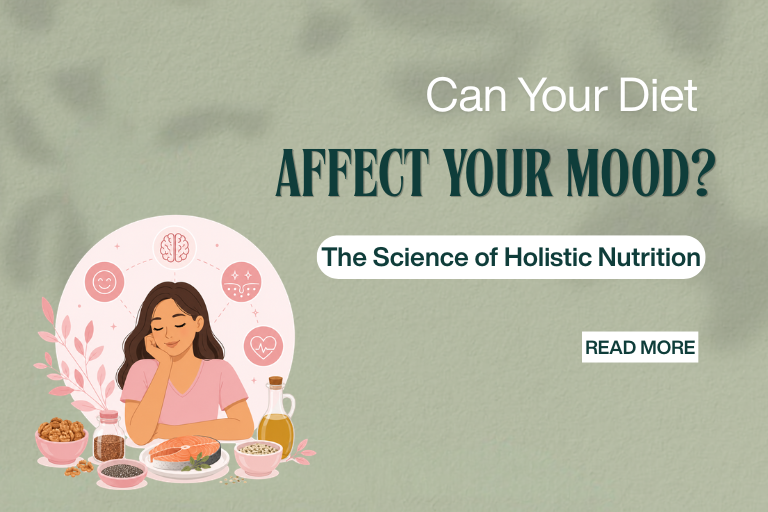
Can Your Diet Affect Your Mood? The Science of Holistic Nutrition
Have you ever noticed how a stressful week leads to stronger junk food cravings? Or how certain meals leave you feeling sluggish, tired, or mentally drained?
That’s not a coincidence. Your brain, gut, hormones, sleep, stress levels, and nutrition patterns are deeply connected.
Modern nutrition science increasingly shows that food influences far more than body weight. It can affect energy, focus, cravings, stress resilience, and emotional well-being.
The good news? Small, sustainable nutrition and lifestyle habits can make a meaningful difference.
Here’s what science says about the connection between food, mood, stress, and overall mental wellbeing.
The Gut-Brain Connection: What Science Says
Your gut and brain communicate constantly through what researchers call the gut-brain axis, a two-way communication network involving the nervous and immune systems, hormones, and the gut microbiome.
The bacteria living inside your digestive system influence processes linked to:
- inflammation
- stress responses
- metabolism
- immune function
- neurotransmitter activity
While mood is influenced by many factors including sleep, stress, movement, relationships, and mental health support, nutrition and gut health can play an important supporting role.
Some signs your lifestyle habits may be affecting how you feel include:
- frequent energy crashes
- poor focus
- brain fog
- digestive discomfort alongside stress
- stronger cravings during emotional periods
- feeling tired despite adequate sleep
Supporting gut health is not a magic solution, but it can be one meaningful piece of improving overall wellbeing.
Foods That Support Brain Health and Mood
No single food “fixes” stress or low mood. However, certain dietary patterns are associated with better brain health and emotional wellbeing.
Foods Worth Prioritizing
Fatty Fish- Rich in omega-3 fats involved in brain structure and inflammatory regulation.
Dark Leafy Greens- Provide nutrients like folate and magnesium that support overall health.
Fermented Foods- May support gut microbial diversity.
Nuts and Seeds- Provide healthy fats, fibre, and micronutrients.
Whole Grains- Can support steadier energy levels through the day.
Colourful Fruits- Rich in antioxidants and fibre.
Nutrition works best as a pattern, not a single superfood.
Blood Sugar Stability Matters More Than Most People Realize
Large swings in blood sugar can influence:
- energy levels
- cravings
- concentration
- mood stability
- appetite regulation
Simple habits that may help:
- including protein with meals
- eating enough fibre
- avoiding long gaps without food
- building meals around minimally processed foods
- pairing carbohydrates with protein when possible
Examples:
- fruit + nuts
- toast + eggs
- oats + yogurt
- rice + dal + vegetables
Stable energy often supports better focus, fewer crashes, and improved appetite control.
Holistic Nutrition Looks Beyond Calories
Food matters, but so do the systems influencing how your body functions.
A holistic approach looks at:
- sleep quality
- stress management
- movement
- digestion
- nutrient adequacy
- meal timing
- lifestyle patterns
Some nutrients commonly studied in relation to mental wellbeing include:
- Vitamin D
- Magnesium
- Omega-3 Fats
- B Vitamins
Some dietary habits that may negatively affect energy and appetite regulation when consumed excessively:
- ultra-processed foods
- excessive sugary drinks
- highly refined snack foods
- chronic under-eating
- irregular meal patterns
Nutrition is rarely about perfection. Consistency matters more.
Stress and Weight Changes Are More Connected Than Many People Think
Many people struggle with body composition changes despite “eating healthy.”
One overlooked factor is chronic stress.
Long-term stress can influence:
- appetite regulation
- food choices
- sleep quality
- recovery
- energy levels
- physical activity patterns
Stress can also contribute to stronger cravings for highly palatable foods.
Simple habits that may support stress resilience:
- regular movement
- adequate sleep
- eating at relatively consistent times
- reducing excessive caffeine intake if sensitive
- spending time outdoors
- breathwork or mindfulness practices
- building recovery into your routine
Lasting change usually happens when stress management and nutrition work together.
Understanding Emotional Eating Patterns
Emotional eating often develops as a learned coping pattern where food becomes linked to stress relief, comfort, boredom, reward, or emotional regulation.
Common patterns include:
Stress → crunchy or salty foods
Fatigue → convenience foods
Boredom → mindless snacking
Anxiety → seeking quick comfort foods
Social environments → eating beyond hunger
Building awareness can help.
Helpful tools:
- keeping a food and mood journal
- pausing before stress eating
- identifying emotional triggers
- building non-food coping strategies
Examples:
- a short walk
- journaling
- stretching
- calling someone supportive
- stepping outside for fresh air
The goal is not perfection.
The goal is awareness.
Final Thoughts
Mental and physical wellbeing are deeply connected.
Nutrition alone does not replace professional mental healthcare. However, sleep quality, stress management, movement patterns, gut health, and nutritional adequacy can meaningfully influence how we feel physically and emotionally.
Small habits done consistently often create more change than extreme approaches.
Focus on foundations:
- balanced nutrition
- movement
- sleep
- stress management
- recovery
- sustainable habits
Your food choices influence far more than body weight.
They influence how you feel, function, and show up in everyday life.