
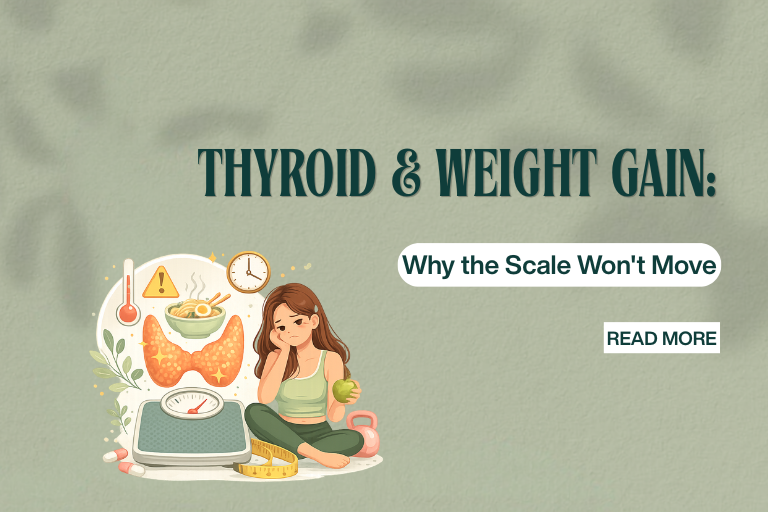
Thyroid & Weight Gain: Why the Scale Won't Move (Even When You're Doing Everything Right)
You’re eating clean. You’ve cut sugar, you’re walking 10,000 steps, you’ve even given up your evening chai with biscuits. And yet, the scale refuses to budge or worse, it’s creeping up.
If this sounds familiar, you’re not imagining it, and you’re definitely not “lacking discipline.” For a huge number of women I work with, the missing piece isn’t another diet plan. It’s their thyroid.
Let’s break down what’s really going on, and what an effective thyroid and weight gain diet actually looks like.
The Thyroid-Weight Connection: What’s Actually Happening
Your thyroid is a small, butterfly-shaped gland in your neck that controls your metabolism basically, how efficiently your body turns food into energy.
When it’s underactive (a condition called hypothyroidism), everything slows down:
- Metabolism slows
- Energy levels drop
- Digestion becomes sluggish
- Body starts storing fat more easily
- Water retention increases
So even if your calorie intake is “correct” on paper, your body simply isn’t processing things the way it should. This is why generic diet plans often fail for thyroid patients; they’re designed for a metabolism that’s working at full speed.
Signs Your Thyroid Might Be Behind the Weight Gain
If you relate to most of these, it’s worth getting your thyroid checked (TSH, T3, T4 ask your doctor):
- Unexplained weight gain despite dieting
- Constant fatigue, even after sleep
- Hair fall or thinning
- Dry skin
- Feeling cold often
- Irregular periods
- Brain fog or low concentration
- Constipation
- Puffy face or swelling
Why Calorie Counting Alone Doesn’t Work Here
Most crash diets focus on “eat less, move more.” But with an underactive thyroid:
- Severe calorie cuts can slow metabolism further
- Nutrient deficiencies (iodine, selenium, zinc, iron) worsen thyroid function
- Stress from restrictive dieting raises cortisol, which adds to weight gain
- Muscle loss from under-eating reduces metabolic rate long-term
This is why the right approach isn’t “eat less” it’s “eat right, for your body’s actual needs.”
Thyroid and Weight Gain Diet: What to Include
Here’s what generally supports thyroid function and healthy metabolism:
- Iodine-rich foods: iodised salt, dairy, eggs
- Selenium sources: brazil nuts, sunflower seeds, mushrooms
- Zinc-rich foods: chickpeas, lentils, pumpkin seeds
- Protein with every meal: paneer, dal, eggs, sprouts, fish
- Healthy fats: ghee, nuts, seeds, olive oil
- Fibre-rich foods: vegetables, fruits, whole grains
- Iron sources: spinach, jaggery, dates, beetroot
- Warm, cooked foods: easier on digestion than raw/cold foods
Foods That May Work Against Your Thyroid
These don’t need to be eliminated completely, but should be eaten mindfully (especially raw and in large amounts):
- Raw cruciferous vegetables (cabbage, cauliflower, broccoli) in excess
- Excess soy products
- Processed and packaged foods
- Excess sugar and refined carbs
- Too much caffeine on an empty stomach
- Skipping meals for long hours
A simple tip: lightly cooking cruciferous vegetables instead of eating them raw reduces their impact on thyroid function.
Beyond Diet: Lifestyle Tips for Thyroid Weight Loss
Diet is only one piece. These habits matter just as much:
- Take thyroid medication on an empty stomach, as advised
- Wait 30-45 mins before eating after medication
- Prioritise 7-8 hours of sleep
- Manage stress (yoga, walks, breathing exercises)
- Strength training 2-3x a week to support metabolism
- Stay consistent thyroid healing takes months, not days
Sample Hypothyroidism Diet Plan (India)
A simple day might look like:
- Early Morning: Warm water with soaked methi and saunf seeds water
- Breakfast: Moong dal cheela with 2 boiled eggs or yoghurt
- Mid Morning: Walnut halves + 1 Brazil Nut
- Lunch: Dal + curd + chapati + vegetables + salad
- Evening: Seasonal fruit with almonds
- Dinner: Khichdi + paneer cubes or grilled chicken + sautéed vegetables
Note: This is a general guide, not a prescription. Thyroid levels, medication, and individual needs vary and always personalise with a professional.
When to See a Doctor or Get Personalised Help
Get your thyroid tested if you’ve had unexplained weight gain for 2-3 months despite consistent effort. And if you’re already diagnosed but still struggling, you likely need a plan built around your reports, medication timing, and lifestyle not a generic template.
This is exactly the kind of personalized approach we build into the Holistic Lifestyle Program looking at your hormones, habits, and history together, not just your calorie intake.
Ready to Stop Guessing?
If your weight gain doesn’t match your effort, it’s time to look beyond calories. Book a consultation with Karisma and get a plan built around your thyroid, hormones, and lifestyle not a one-size-fits-all template.