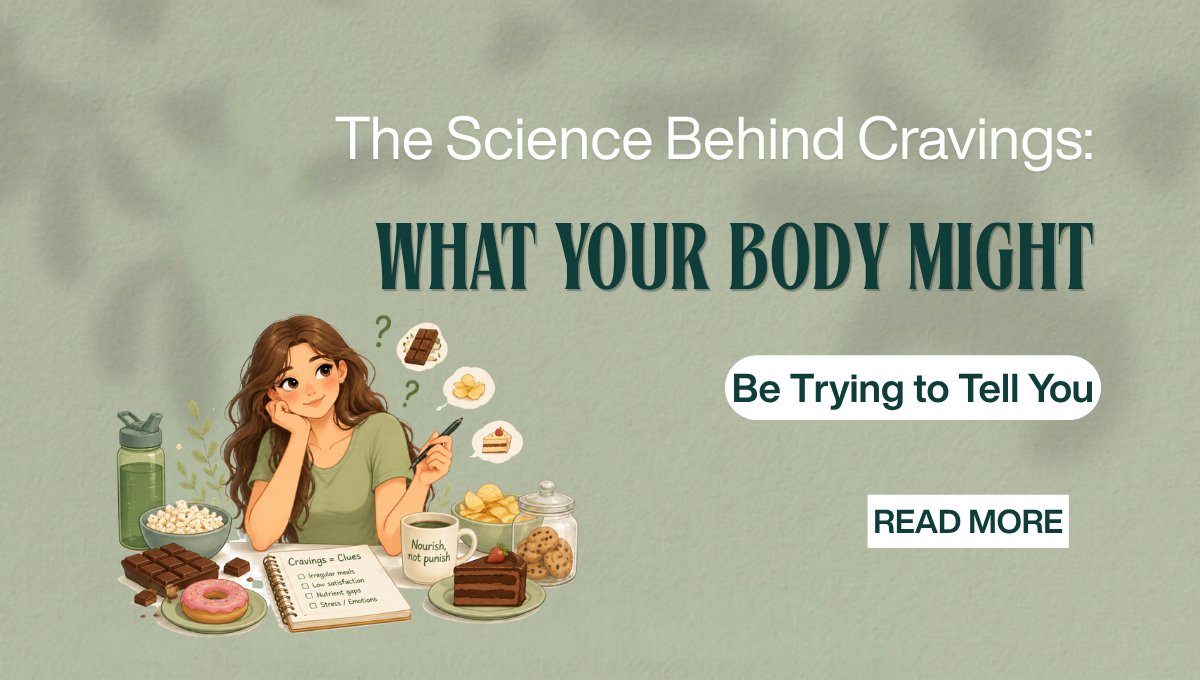
The Science Behind Cravings: What Your Body Might Be Trying to Tell You
Cravings often get blamed on weak willpower. In reality, a craving is rarely just “in your head” , it’s usually your body sending a signal. That signal could be about blood sugar, sleep, stress, hormones, or even a genuine nutrient gap. The type of craving often points to the cause.
Once you understand what’s actually driving a craving, it’s much easier to respond to it instead of just fighting it.
1. Why Cravings Happen in the First Place
Cravings are your brain’s way of asking for something specific, usually triggered by one of a few underlying patterns.
- Blood sugar drops can trigger an urgent craving for quick energy, usually in the form of sugar or refined carbs.
- Poor sleep disrupts the hormones that regulate hunger and fullness, making cravings stronger the next day.
- Chronic stress raises cortisol, which specifically increases cravings for more fat, more sugar “comfort” foods.
- Dehydration is frequently mistaken for hunger, especially for sweet or salty cravings.
- Genuine micronutrient gaps can trigger cravings for foods that contain what’s missing.
Most cravings are a combination of these, which is why the same craving can have different root causes on different days.
2. Sugar Cravings
Sugar cravings are the most common, and usually the most misunderstood.
- A drop in blood sugar after a high-carb, low-protein meal often triggers an urgent craving for more sugar shortly after.
- Poor sleep increases ghrelin (the hunger hormone) and reduces leptin (the fullness hormone), both of which push you toward sugar specifically.
- Sugar temporarily boosts dopamine, so stress or low mood can drive cravings that are more emotional than physical.
- Low chromium or magnesium levels have also been linked to stronger sugar cravings in some people.
Pairing carbs with protein and fibre at each meal is one of the most effective ways to reduce this specific craving pattern.
3. Salt Cravings
Salt cravings are less talked about, but they usually point to a fairly specific set of causes.
- Dehydration is a common trigger, since sodium and water balance are closely linked in the body.
- Heavy sweating, from exercise or hot weather, depletes sodium and can trigger a genuine craving to replace it.
- Chronic stress can also affect the hormones (like aldosterone) that regulate sodium balance.
- In rare cases, persistent, intense salt cravings can be linked to adrenal or thyroid issues and are worth mentioning to a doctor if they’re unusual for you.
4. Chocolate Cravings
Chocolate cravings are common enough, and specific enough, to deserve their own explanation.
- Chocolate is genuinely high in magnesium, and some research links chocolate cravings to a mild magnesium gap, especially before periods.
- It also affects dopamine and serotonin, making it a common emotional comfort food during stress or low mood.
- Cravings for chocolate often spike in the luteal phase of the menstrual cycle, tied to shifting oestrogen and progesterone levels.
- Dark chocolate with higher cocoa content can often satisfy the craving with less added sugar than milk chocolate.
5. Carb Cravings
Carb cravings are frequently about brain chemistry as much as hunger.
- Carbohydrates increase serotonin production, which is why stress or low mood often triggers a pull toward bread, rice, or pasta.
- Skipping meals or eating less earlier in the day often leads to intense carb cravings later on.
- Low-carb diets can trigger strong cravings as the body adjusts, which is a normal short term response rather than a sign of failure.
6. Cravings Tied to Your Menstrual Cycle
Hormonal shifts across the menstrual cycle are one of the most consistent, predictable causes of cravings.
- In the luteal phase (the 1-2 weeks before your period), dropping progesterone and oestrogen are linked to increased appetite and cravings.
- Serotonin also dips during this window, which drives cravings for more carbs and sugary comfort foods.
- This pattern is a normal hormonal response, not a lack of discipline, and tends to resolve once your period starts.
Emotional Cravings vs Physical Hunger
One of the most useful skills is learning to tell these two apart, since they call for different responses.
- Physical hunger builds gradually and can be satisfied by a range of foods, not just one specific item.
- Emotional cravings tend to appear suddenly, often after a stressful moment, and usually target one very specific food.
- Physical hunger is felt in the stomach; emotional cravings are often felt more “in the head.”
- Physical hunger is generally satisfied once you’re full; emotional cravings can persist even after eating.
Neither is “wrong” but knowing which one you’re dealing with helps you respond to it more effectively.
How to Respond to Cravings (Instead of Just Resisting Them)
- Drink a glass of water first, since thirst is frequently mistaken for a craving.
- Check when you last ate a craving 3+ hours after a meal is often genuine hunger.
- Add protein and fibre to your next meal if sugar or carb cravings are frequent.
- If it’s a chocolate craving, consider a magnesium-rich swap like dark chocolate, nuts, or seeds.
- Notice the timing, cravings tied to stress, poor sleep, or your cycle are worth acknowledging rather than fighting.
- Allow the craving in moderation occasionally. Restriction often makes cravings stronger, not weaker.
The Takeaway
Cravings are rarely random, and they’re rarely just about willpower. They’re often your body flagging something like low blood sugar, poor sleep, stress, a hormonal shift, or an actual nutrient gap.
Learning to read these signals, instead of only trying to suppress them, makes it far easier to respond in a way that actually works.
Want to understand what your cravings are really telling you? Connect with Nourish by Karisma for personalized nutrition guidance that works with your body.