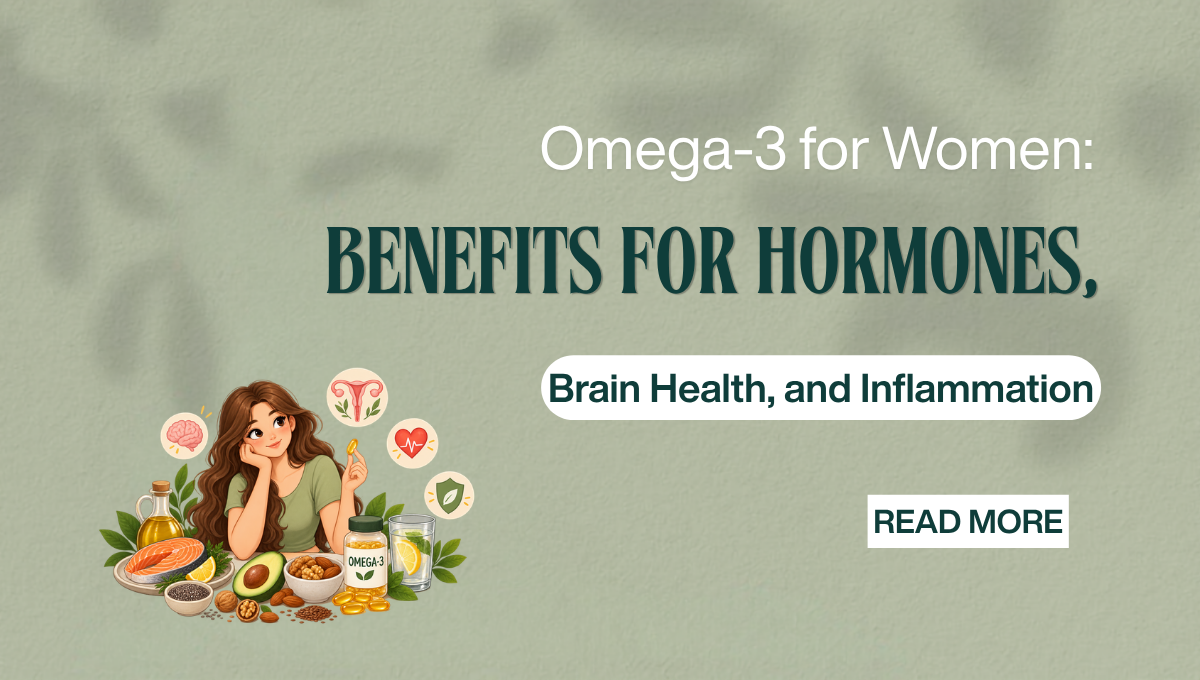
Omega-3 for Women: Benefits for Hormones, Brain Health, and Inflammation
Omega-3 is usually mentioned alongside heart health and fish oil supplements. That’s accurate, but it’s a small part of what this fat actually does.
For women specifically, omega-3 plays a direct role in hormone regulation, brain function, mood, and how much inflammation the body carries day to day. Here’s a closer look at why this particular fat deserves more attention than it usually gets.
1. Omega-3 and Hormonal Balance
Omega-3 fatty acids are building blocks for hormone-like compounds that regulate inflammation and reproductive hormone activity.
- Omega-3s are used to produce prostaglandins, compounds that influence uterine contractions, inflammation, and pain signalling.
- A specific type of prostaglandin made from omega-3 is linked to less intense period cramps, compared to the more inflammatory type made from omega-6.
- Omega-3 intake has been associated with more regular cycles and reduced PMS symptoms in several studies.
- It also supports healthy communication between the brain and ovaries, which is part of normal hormone signalling.
This is one reason omega-3 is often recommended specifically for period pain and PMS management.
2. Omega-3 and Brain Health
Your brain is roughly 60% fat, and omega-3, specifically DHA, is one of its primary structural components.
- DHA is a major building block of brain cell membranes, supporting communication between neurons.
- Omega-3 is linked to better mood regulation, and low levels are associated with a higher risk of low mood and anxiety.
- It supports memory and focus, which is particularly relevant during hormonal shifts like PMS, pregnancy, or perimenopause, when brain fog is common.
- Omega-3 also plays a protective role in long-term cognitive health as women age.
3. Omega-3 and Inflammation
Chronic, low-grade inflammation is linked to many conditions that disproportionately affect women, including PCOS, endometriosis, and autoimmune thyroid issues.
- Omega-3 actively competes with omega-6 fatty acids, which tend to be more inflammatory when consumed in excess.
- Most modern diets are heavy in omega-6 (from refined oils) and low in omega-3, creating an imbalance that favours inflammation.
- Omega-3 supports the resolution phase of inflammation, essentially helping the body “switch off” inflammation once it’s done its job.
- This is one reason omega-3 is frequently recommended alongside anti-inflammatory approaches for PCOS and endometriosis.
4. Omega-3 for Skin, Heart, and Pregnancy
Beyond hormones, brain, and inflammation, omega-3 supports a few other areas particularly relevant to women.
- It helps maintain the skin’s lipid barrier, supporting hydration and reducing inflammatory skin issues like acne and eczema.
- It supports healthy cholesterol levels and reduces triglycerides, both relevant to long-term heart health.
- DHA is essential for foetal brain and eye development during pregnancy, which is why it’s commonly recommended prenatally.
- It also supports postpartum mood regulation, an area where omega-3 levels are known to shift significantly.
Signs You Might Be Low in Omega-3
- Dry or flaky skin that doesn’t improve with regular moisturiser.
- Low mood or increased anxiety without an obvious external cause.
- Joint stiffness or general aches, particularly worse in the morning.
- Difficulty concentrating or persistent brain fog.
- More intense PMS symptoms or period pain than usual.
These signs alone don’t confirm a deficiency, but they’re worth paying attention to alongside your overall diet pattern.
Best Omega-3 Sources (Including Vegetarian Options)
For Non-Vegetarians
- Fatty fish like salmon, sardines, and mackerel are the richest natural sources of EPA and DHA, the most bioactive forms of omega-3.
- Eggs from omega-3-fed hens offer a smaller but useful contribution.
For Vegetarians
- Flaxseeds and chia seeds are rich in ALA, a plant form of omega-3 that the body partially converts to EPA and DHA.
- Walnuts are another strong plant-based source of ALA.
- Algae-based omega-3 supplements are one of the few direct vegetarian sources of DHA and EPA, since algae is what fish get their omega-3 from originally.
Because the body converts ALA to DHA/EPA inefficiently, vegetarians often benefit from a slightly higher intake of plant sources, or an algae based supplement.
Simple Ways to Get More Omega-3 Daily
- Add a tablespoon of ground flaxseed or chia seeds to breakfast, smoothies, or yogurt.
- Include walnuts as your snack a few times a week.
- Aim for fatty fish 2-3 times a week if you eat non-vegetarian.
- Reduce refined seed oils, since cutting back on omega-6 helps improve your overall omega-3 to omega-6 ratio.
- Consider an algae-based DHA supplement if you’re vegetarian and not getting consistent plant sources.
The Takeaway
Omega-3 isn’t just a heart-health supplement. For women, it plays an active role in hormone regulation, brain function, mood, and how much inflammation the body carries. A few consistent sources through the week, seeds, nuts, fatty fish, or a good supplement can support all of these areas at once.
Want to know how much omega-3 your body actually needs? Connect with Nourish by Karisma for personalized nutrition guidance built around you.