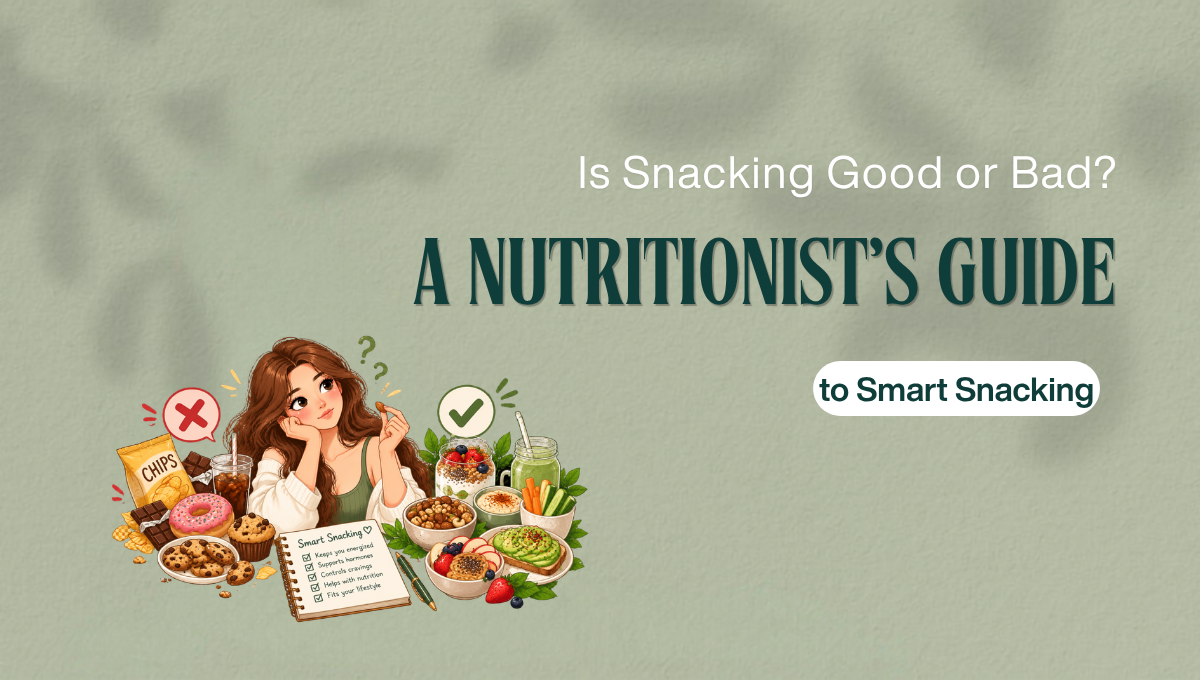
Is Snacking Good or Bad? A Nutritionist’s Guide to Smart Snacking
It’s 4 PM. You’ve finished lunch a few hours ago, you’re starting to feel hungry, and there’s a packet of biscuits sitting right next to your desk. Should you eat?
Or should you try to ignore the hunger because you’re “trying to eat healthy”? Snacking has developed a slightly confusing reputation. Some people believe that eating between meals automatically leads to overeating. Others believe that eating small meals and snacks throughout the day is always better.
But the truth is much simpler: Snacking isn’t inherently good or bad. What matters is why you’re snacking, how often you’re doing it, what you’re choosing, and how it fits into your overall eating pattern. For some people, a snack can prevent them from becoming extremely hungry before their next meal. For others, frequent snacking may simply add extra calories without providing much nourishment. The goal isn’t to eliminate snacks.
It’s to learn how to snack intentionally.
What Is Snacking?
Snacking generally refers to eating or drinking something between your main meals. This could be anything from:
- a piece of fruit
- a handful of nuts
- roasted chana
- yoghurt
- a sandwich
- biscuits
- chips
- a sweetened coffee
So, when we talk about “snacking,” we’re not automatically talking about unhealthy food. A snack can be highly nutritious—or it can simply be something you grabbed because you were bored.
That’s why the question isn’t: “Should I snack?”
A better question is: “What does my body need right now?”
Is Snacking Actually Necessary?
Not everyone needs snacks. Some people are perfectly comfortable eating three satisfying meals a day. Others may genuinely feel hungry between meals because of their schedule, activity levels, appetite or meal timing.
A snack can be particularly useful when:
- there are several hours between meals
- you’re genuinely hungry
- your previous meal was small
- you’re exercising later in the day
- you need something convenient between work or classes
- you struggle to eat enough during your main meals
On the other hand, you may not need a snack if you’re eating simply because there’s food available.
Hunger not the clock alone can be a useful guide.
Why Do We Snack?
Hunger is only one reason people eat between meals. Sometimes we’re eating because we’re:
- bored
- stressed
- tired
- distracted
- socialising
- watching television
- surrounded by food
- looking for comfort
This doesn’t mean emotional eating is something to feel guilty about. Food is connected to emotions, celebrations and memories. The important thing is learning to recognise your patterns. Before reaching for a snack, ask yourself:
“Am I physically hungry?”
Signs of physical hunger can include:
- stomach rumbling
- lower energy
- difficulty concentrating
- feeling hungry gradually rather than suddenly
- willingness to eat a variety of foods
Or am I eating because…
- I’m bored?
- I’m stressed?
- I’m scrolling?
- I’m tired?
- Someone else is eating?
- I simply saw food?
There is no need to judge your answer. Awareness is the first step.
What Makes a Snack “Healthy”?
A nutritious snack doesn’t need to be complicated. In general, a balanced snack is one that provides some combination of protein, fibre and healthy fats, depending on your individual needs. These nutrients can make snacks more satisfying than foods that are primarily refined carbohydrates or added sugars.
For example:
Instead of:
Biscuits + sweetened tea
Try:
Roasted chana + fruit + unsweetened tea
Or:
Instead of:
A packet of chips
Try:
Makhana + a handful of nuts The idea isn’t that biscuits or chips are “bad.” It’s about having options that provide more nourishment when you are genuinely hungry.
The Protein + Fibre Combination
One of the easiest ways to build a satisfying snack is to combine protein with fibre. Protein helps support muscle and other tissues, while fibre contributes to fullness and digestive health. Together, they can make your snack more substantial.
Try combinations like:
- apple + peanut butter
- fruit + Greek yoghurt
- roasted chana + fruit
- boiled eggs + vegetables
- hummus + cucumber/carrot
- paneer cubes + fruit
- curd + chia seeds
- sprouts + vegetables
- nuts + fruit
You don’t need every snack to contain all the nutrients. Think of these combinations as a simple framework not a strict rule.
Can Snacking Help With Weight Management?
It depends. A snack isn’t automatically helpful for weight management, and skipping snacks doesn’t automatically lead to weight loss. Your overall dietary intake, activity, sleep, appetite and many other factors matter. For some people, a planned snack can prevent them from becoming extremely hungry and overeating later.
For others, adding several snacks when they aren’t hungry can increase their overall energy intake. That’s why there isn’t a universal rule like: Eat every 2 hours to boost metabolism.” Your metabolism doesn’t suddenly stop because you went several hours without eating. Instead, choose a meal pattern that works with your hunger, schedule and nutritional needs.
Mindless Snacking: The Problem Isn’t Always the Food
Have you ever opened a packet of chips while watching something and suddenly realised the entire packet was gone? This is extremely common. When you’re distracted, it’s harder to notice how much you’re eating or whether you’re still hungry.
Try these simple habits:
- Put your snack in a bowl instead of eating from the packet.
- Sit down while eating.
- Avoid eating directly in front of a screen whenever possible.
- Slow down instead of rushing.
- Check in with your hunger halfway through.
These small changes can make snacking more intentional without turning it into a restrictive exercise.
How to Read a Snack Label
When buying packaged snacks, don’t focus on one number alone.
Start with the serving size.
A packet may contain more than one serving.
Then look at:
Protein:
Higher amounts can make a snack more filling.
Fibre:
Useful for digestive health and satiety.
Added sugar:
Check how much sugar has been added rather than assuming something is healthy because the front says “natural.”
Sodium:
Worth paying attention to, especially if you regularly consume packaged foods.
Ingredients:
A shorter ingredient list isn’t automatically healthier, but it can help you understand what you’re eating.
Should You Eat Before Bed?
There’s no universal rule that eating after a certain hour automatically causes weight gain. If you’re genuinely hungry before bed, a small snack may be perfectly reasonable. The choice depends on your overall eating pattern and individual needs.
You could choose something simple such as:
- plain curd
- fruit
- a small handful of nuts
- milk
- a light protein-rich snack
If eating late consistently causes reflux, discomfort or interferes with your sleep, your meal timing may need some adjustment.
Smart Snacking for Different Situations
Your ideal snack can change depending on what you’re doing.
Before Exercise
Choose something that provides easily digestible carbohydrates, especially if you haven’t eaten for several hours.
Examples:
- banana
- fruit + yoghurt
- toast + peanut butter
After Exercise
Consider including protein along with carbohydrates.
Examples:
- yoghurt + fruit
- eggs + toast
- paneer + roti
- milk + fruit
At Work
Keep convenient options available:
- nuts
- roasted chana
- fruit
- makhana
- yoghurt
While Travelling
Pack options that don’t spoil easily:
- roasted chana
- nuts
- seeds
- whole fruit
- homemade snack mixes
Preparation often makes better choices easier.
A Simple Formula for Better Snacking
If you’re unsure what to choose, use this simple framework:
Protein + Fibre + Flavour
For example:
Curd + fruit + chia seeds
Roasted chana + guava
Egg + whole-grain toast
Apple + peanut butter
Sprouts + vegetables + lemon
This isn’t a strict formula. It’s simply a way to make your snack more satisfying and nutritionally balanced.
When You Don’t Need a Snack
Sometimes the healthiest snack is no snack at all. If you’re comfortably full after lunch and dinner is coming soon, there’s no need to eat simply because it’s “snack time.” You don’t have to eat according to someone else’s schedule.
Listen to your body’s hunger and fullness cues. At the same time, don’t use this idea to ignore genuine hunger.
Eating when you’re hungry isn’t a lack of discipline. It’s part of nourishing your body.
Final Thoughts
Snacking doesn’t need to be another set of food rules. You don’t need to avoid snacks because you’re trying to eat “clean,” and you don’t need to snack constantly because someone told you it will boost your metabolism.
Instead, start by asking yourself a simple question: “Am I actually hungry, and what would satisfy me?”
If you’re hungry, give your body something nourishing. Choose foods that provide the nutrients you need, eat them mindfully, and move on with your day. A handful of nuts, a piece of fruit, a bowl of curd or some roasted chana may not look like a complicated wellness trend but sometimes, simple nutrition is exactly what your body needs.