
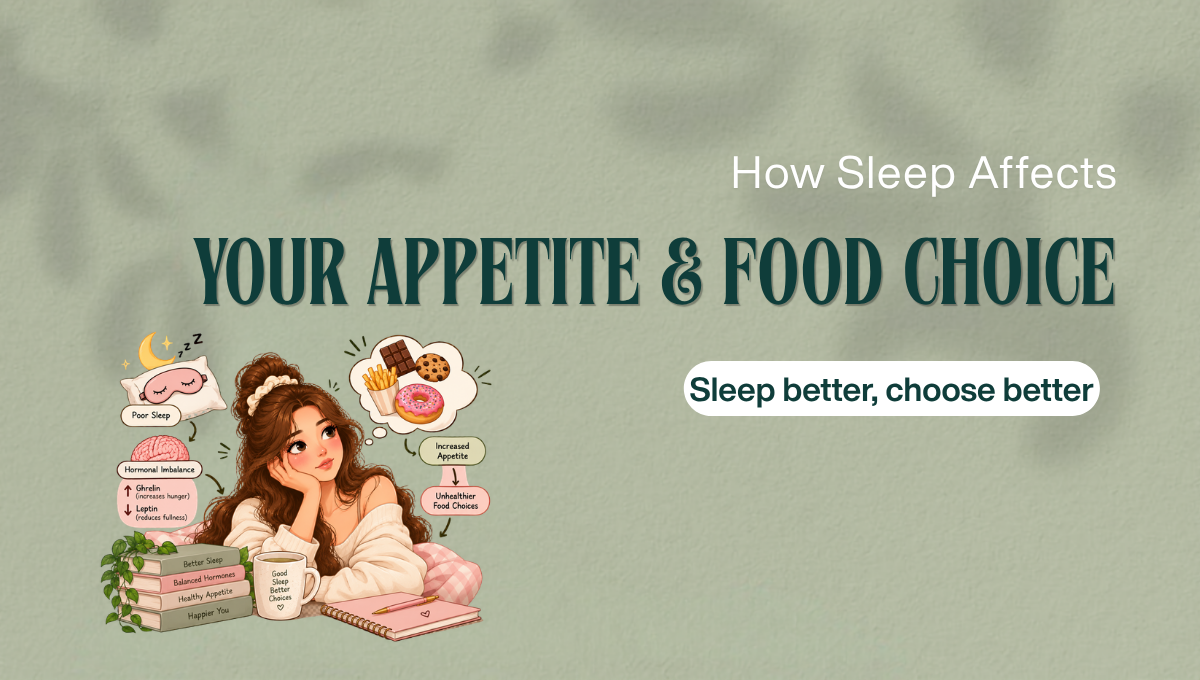
How Sleep Affects Your Appetite and Food Choices
You sleep badly, and the next day you want chai with biscuits at 11 am, something fried at 4 pm, and a sweet “reward” after dinner. It’s not a lack of willpower. It’s biology.
The link between sleep and appetite is one of the most consistent findings in nutrition research. Cut your sleep short and your hunger signals, brain and blood sugar all shift in a way that pushes you toward more food, and worse food.
Your hunger hormones go out of balance
Two hormones run the show. Ghrelin tells your brain you’re hungry. Leptin tells it you’re full.
In a well-known study from the University of Chicago, young men limited to four hours of sleep for two nights showed about 18% lower leptin and about 28% higher ghrelin. Their hunger rose by roughly 24%, and their appetite for sweet, starchy and salty foods jumped by 33 to 45%.
So you feel hungrier and less satisfied at the same time. That’s a rough combination.
Your brain stops guarding the snack cupboard
Sleep loss also changes how your brain judges food. A study published in Nature Communications found that after a night of poor sleep, the reward centers of the brain responded more strongly to food, while the frontal areas responsible for self-control were less active.
In plain words: the chips look better and your ability to say no gets weaker. This is why sleep deprivation and cravings go together, and why the cravings are almost never for broccoli.
What it means in numbers
- A review of sleep restriction studies found people ate roughly 380 more calories a day when sleep-deprived, with more of it coming from fat.
- In a 2022 trial in JAMA Internal Medicine, adults who habitually slept under 6.5 hours extended their sleep by about 1.2 hours a night and ate around 270 fewer calories a day without being told to diet.
- In a two-week diet study, people sleeping 5.5 hours lost about 55% less body fat than those sleeping 8.5 hours on the same calorie deficit. They lost more muscle instead.
Even a conservative 250 calories a day adds up to roughly 1 kg of body weight every month and a half. Sleep alone can quietly decide whether a diet works.
Blood sugar takes a hit too
Poor sleep makes your body less responsive to insulin. One study found that a single night of restricted sleep reduced insulin sensitivity by around 19% in healthy adults. When your blood sugar levels swing more, you get sharper highs, steeper crashes, and the 3 pm slump that sends you looking for sugar.
Over time, this pattern is linked with a higher risk of weight gain and type 2 diabetes.
Late-night snacking isn’t random
Your circadian rhythm, your internal 24-hour clock, also controls when your body expects food. Staying up late stretches your day and gives you extra hours to eat. Most of that extra eating happens at night, when digestion is slower and choices are poorer.
Tired people tend to reach for quick energy, which means sugary, refined, high-calorie foods. Few people crave dal at midnight.
Dietary tips that actually help
- Eat protein at breakfast. Aim for 20 to 25 g (eggs, paneer, sprouts, besan chilla, curd with nuts). It steadies blood sugar and reduces cravings later in the day, especially after a bad night.
- Don’t fight tiredness with sugar. After a poor night, plan your snacks in advance. Pair carbs with protein or fat: apple with peanut butter, roasted chana, a handful of almonds. Keep sweets out of arm’s reach, not out of your life.
- Cut caffeine early. Research shows caffeine taken even six hours before bed can reduce sleep by about an hour. Set a cutoff around 2 pm. Remember that tea, cola and chocolate count too.
- Finish dinner 2 to 3 hours before bed. Eating late disturbs sleep quality and digestion. If you’re hungry later, a small snack like a banana, a bowl of curd or warm milk is fine.
- Get your magnesium and tryptophan. Pumpkin seeds, almonds, bananas, oats, milk and leafy greens support relaxation and sleep. They won’t replace good sleep habits, but they help.
- Eat fiber at dinner. Meals high in fiber, such as vegetables, dal and whole grains, are linked with deeper sleep. Meals heavy in saturated fat and refined sugar are linked with lighter, more broken sleep.
- Go easy on alcohol. It may make you drowsy, but it fragments sleep in the second half of the night and increases next-day hunger.
- Get morning light and keep consistent timings. Ten to fifteen minutes of morning sunlight and a steady wake-up time anchor your circadian rhythm, which keeps hunger cues more predictable.
- Track it for a week. Note your sleep hours and what you ate the next day. Most people spot the pattern fast: short sleep, more snacking.
The takeaway
Food and sleep are two sides of the same coin. Bad sleep raises hunger, weakens self-control and pushes you toward high-calorie foods, while poor eating can make sleep worse in return.
If your diet isn’t working, don’t just look at your plate. Look at your pillow. Aim for 7 to 9 hours, build a calm evening routine, and let your appetite do the rest of the work.
This article is for general information and isn’t medical advice. If you have persistent sleep problems, diabetes or an eating disorder, consult a qualified healthcare professional.