
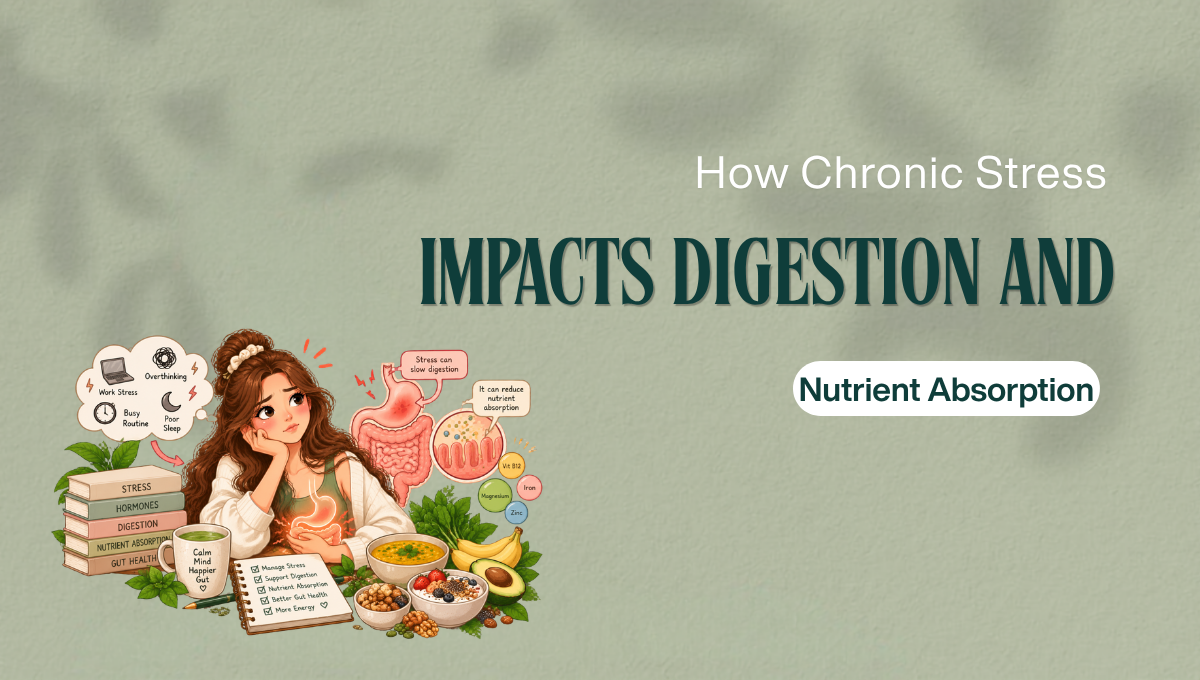
How Chronic Stress Impacts Digestion and Nutrient Absorption
You eat clean, you cook at home, you take your supplements. Yet you’re bloated by 4 pm, tired all day, and your labs say you’re low on something again. Before blaming your diet, look at your stress.
The link between chronic stress and digestion is one of the most overlooked reasons people eat well and still don’t feel well. It isn’t just about what goes into your body. It’s about whether your body is in a state where it can use it.
Your gut has its own nervous system
Your digestive tract contains hundreds of millions of neurons, often called the “second brain.” It talks to your actual brain constantly through the gut-brain axis, a two-way communication line made of nerves, hormones and immune signals.
That’s why anxiety gives you butterflies, and why a stressful week can leave you constipated, or running to the bathroom. Your gut doesn’t just feel your stress. It responds to it physically.
The “rest and digest” problem
Your nervous system has two main modes. In “fight or flight” (sympathetic), your body prioritizes survival. In “rest and digest” (parasympathetic), it prioritizes digestion and repair.
You can’t be fully in both at once.
When stress is short-lived, your body shifts back quickly. When stress is chronic, from deadlines, financial pressure, poor sleep or constant notifications, your body stays stuck in survival mode. Digestion gets treated as non-essential. Blood flow moves away from the gut, and the process slows or becomes erratic.
What chronic stress does inside your digestive system
1. Lower stomach acid and enzyme output. Digestion starts with signals from the brain. Under stress, the production of stomach acid and digestive enzymes can drop. Food isn’t broken down properly, so protein, iron, and B12 are harder to extract.
2. Disrupted gut motility. Stress can speed up or slow down how fast food moves through you. This is why some people get diarrhea under pressure and others get constipation. Either way, food spends the wrong amount of time in contact with the intestinal wall, which affects absorption.
3. Stress-related bloating and discomfort. When food sits undigested, gut bacteria ferment it, producing gas. Add a more sensitive gut under stress, and you get stress-related bloating, cramping and that heavy feeling after small meals.
4. Changes in the gut microbiome. Elevated cortisol levels over time are associated with shifts in the gut microbiome, reducing the diversity of beneficial bacteria. A less balanced microbiome means less support for digestion, immunity and even mood.
5. Increased intestinal permeability. Research suggests prolonged stress can loosen the tight junctions in the gut lining. This is the idea behind “leaky gut,” and while the science is still developing, it’s linked with gut inflammation and food sensitivities. Think of it as the gut’s security system getting less selective.
The nutrient drain loop (the part most blogs miss)
Here’s what makes chronic stress especially tricky. It doesn’t just reduce nutrient absorption. It also increases how much your body burns through.
Magnesium is used up during the stress response, and low magnesium makes you feel more anxious and tense, which creates more stress.
B vitamins are needed to make energy and neurotransmitters, and demand rises under pressure.
Zinc and vitamin C are heavily used by the stress and immune response.
Iron and B12 need adequate stomach acid to be absorbed.
So you absorb less while needing more. This two-way squeeze is how nutrient deficiencies develop even in people with a decent diet. And deficiencies like low magnesium and B12 cause fatigue, poor focus and irritability, which feel a lot like more stress. That’s the loop.
Signs your stress may be affecting your gut
Bloating or discomfort even after light meals
Irregular bowel habits that flare during busy periods
Loss of appetite, or stress eating
Heartburn or nausea when anxious
Constant fatigue despite eating well
Hair thinning, brittle nails or frequent low iron or B12
These can have many causes, so persistent symptoms are worth checking with a doctor.
What actually helps
Eat in a calm state. Most people skip this one. Take 3 to 5 slow breaths before you eat. Put your phone down. Chew thoroughly. This activates the vagus nerve, which signals the gut to start digesting, and it costs nothing.
Don’t eat on the run. Eating while stressed, working or scrolling means your body is in the wrong mode to digest.
Feed your microbiome. Include fiber-rich foods like oats, lentils, fruits and vegetables, plus fermented foods like curd, buttermilk and kanji if they suit you.
Support the stress-depleted nutrients. Think magnesium-rich foods (pumpkin seeds, almonds, leafy greens), B vitamin sources (whole grains, eggs, legumes) and zinc (chickpeas, sesame, nuts).
Go easy on gut irritants. Too much caffeine, alcohol and ultra-processed food add to the load when your gut is already sensitive.
Protect your sleep and move daily. A 20-minute walk after meals supports both digestion and stress regulation.
Build real recovery into your day. Breathing exercises, time outdoors and genuine downtime aren’t luxuries. They’re what switches your body back into digestion mode.