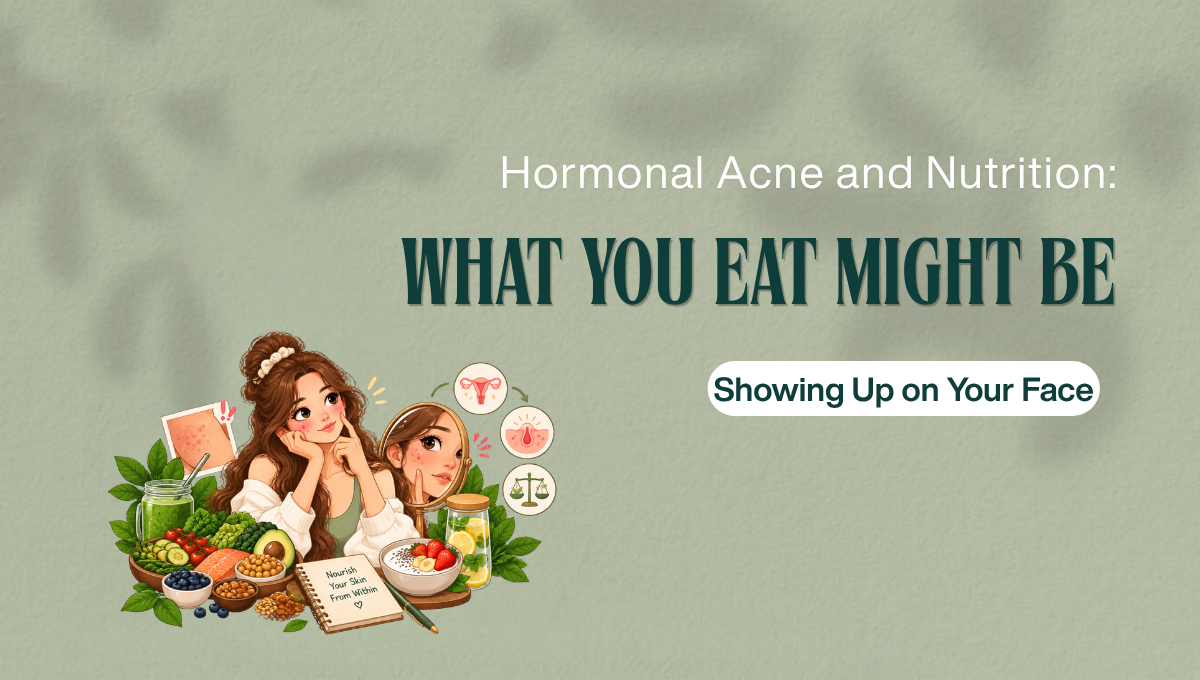
Hormonal Acne and Nutrition: What You Eat Might Be Showing Up on Your Face
If this sounds familiar, you’re not alone.
Acne isn’t only a teenage problem. Adult acne is common, particularly among women, and changing hormone levels can play an important role. Breakouts may become more noticeable around periods, during pregnancy, after starting or stopping certain contraceptives, or during other periods of hormonal fluctuation.
But hormones aren’t the only piece of the puzzle.
Your skin also interacts with your metabolism, inflammation, gut health, lifestyle, sleep, stress, and nutrition. That doesn’t mean one particular food is responsible for every breakout. And it certainly doesn’t mean you need to follow a restrictive “acne diet.”
But research does suggest that dietary patterns can influence acne in some people, particularly diets high in rapidly absorbed carbohydrates. Dairy, especially milk, has also been associated with acne in some studies, although the evidence isn’t strong enough to say that everyone with acne needs to avoid dairy.
So, what exactly is happening? Let’s break down the connection between hormones, blood sugar, inflammation and nutrition.
What Is Hormonal Acne?
“Hormonal acne” isn’t a completely separate type of acne. The term is commonly used when hormonal fluctuations appear to contribute to breakouts.
It often presents as:
- breakouts around the jawline and chin
- deeper or more painful pimples
- recurring acne around your menstrual cycle
- acne that begins or continues during adulthood
- breakouts that don’t seem to respond to basic skincare alone
Hormones called androgens can stimulate the skin’s oil glands, increasing sebum production. Excess oil, dead skin cells, bacteria and inflammation can then contribute to clogged pores and acne.
This is where nutrition becomes interesting.
Certain dietary patterns can influence insulin, blood sugar and other metabolic signals, which may interact with pathways involved in acne development.
The Blood Sugar Acne Connection
One of the more studied areas of nutrition and acne is glycemic load. Glycemic load refers to how much a food or meal is likely to raise blood glucose, taking both the carbohydrate quality and quantity into account.
Foods that can cause a rapid rise in blood sugar include:
- sugary drinks
- sweets and pastries
- refined breakfast cereals
- white bread
- many highly processed snack foods
- large portions of refined carbohydrates
When blood glucose rises rapidly, insulin also rises. Research suggests that repeated high-glycemic eating patterns may influence pathways involving insulin and insulin-like growth factor-1 (IGF-1). These pathways can affect processes involved in sebum production, skin-cell growth and inflammation.
This doesn’t mean:
“Carbohydrates cause acne.” It means that the quality and overall pattern of carbohydrate intake may matter. In fact, some controlled studies have found improvements in acne among people following lower-glycemic diets, although researchers still consider the overall evidence limited and more research is needed.
What Should You Eat Instead?
You don’t need to eliminate carbohydrates. Instead, focus on carbohydrates that provide fibre and nutrients and are less likely to cause a rapid blood sugar rise.
Try including:
- oats
- dal
- rajma
- chole
- vegetables
- whole fruits
- whole grains
- beans
- minimally processed foods
A simple change can be:
Instead of: Sweetened cereal + sugary coffee
Try:
Oats + nuts/seeds + fruit + unsweetened or lightly sweetened milk/curd
The goal isn’t perfection. It’s creating meals that provide fibre, protein, healthy fats and carbohydrates together.
What About Dairy and Acne?
This is one of the most confusing areas. You’ve probably heard that milk causes acne. The reality is more nuanced.
Some observational studies have found an association between cow’s milk consumption and acne, particularly with higher intake of milk. However, research hasn’t established that dairy causes acne in everyone. Interestingly, the evidence isn’t the same for every dairy product. The American Academy of Dermatology notes that studies have linked cow’s milk with acne, while studies haven’t found the same evidence for yogurt or cheese. So should you immediately stop drinking milk?
Not necessarily. If you regularly consume milk and notice that your acne consistently worsens alongside it, you can discuss a structured elimination and reintroduction approach with a qualified healthcare professional or dietitian. But randomly eliminating multiple food groups can create nutritional gaps and unnecessary anxiety around eating.
Can Inflammation Affect Your Skin?
Acne is an inflammatory skin condition, so overall dietary patterns that support a healthy inflammatory balance may be relevant. This is where your overall diet matters more than one “superfood.”
Instead of asking: “What one food will clear my acne?”
Ask: What does my overall eating pattern look like?”
A nourishing pattern can include:
Fruits and vegetables
These provide fibre and a wide variety of vitamins, minerals and antioxidant compounds.
Try:
- guava
- berries
- oranges
- tomatoes
- spinach
- carrots
- broccoli
- capsicum
Omega-3-rich foods
Omega-3 fatty acids have anti-inflammatory properties and are an area of interest in acne research, although they shouldn’t be considered an acne treatment on their own.
Sources include:
- fatty fish
- chia seeds
- flaxseeds
- walnuts
Nuts and seeds
These can provide:
- healthy fats
- fibre
- zinc
- magnesium
- vitamin E
A small handful can be an easy addition to breakfast or a snack.
What About Sugar?
Sugar isn’t automatically responsible for every breakout.
However, frequently consuming foods and drinks high in added sugars can contribute to a higher-glycemic dietary pattern, which is one reason researchers are interested in the relationship between diet and acne. Instead of completely banning sweets, look at your overall intake.
You can start by reducing:
- sugary beverages
- frequent desserts
- sweetened coffee
- packaged sweets
- highly processed snacks
And increase:
- whole fruits
- nuts and seeds
- homemade meals
- vegetables
- legumes
- whole grains
It’s about the overall pattern, not one dessert.
Your Gut May Matter Too
The gut and skin communicate through several pathways, often referred to as the gut-skin axis.
Your gut microbiome is influenced by factors such as:
- dietary fibre
- variety of plant foods
- overall diet quality
- medications
- lifestyle
A fiber rich diet supports beneficial gut bacteria, which produce compounds that can influence immune and metabolic processes. However, it’s important not to overstate this connection. There isn’t enough evidence to say that simply “fixing your gut” will cure hormonal acne.
Instead, think of gut health as one part of overall health, rather than a magic solution for your skin.
Foods to Add More Often
Rather than creating a long list of “forbidden foods,” focus on what you can add.
Build your plate around:
Protein
- dal
- eggs
- paneer
- tofu
- chicken
- fish
- Greek yogurt/curd
Fibre-rich carbohydrates
- oats
- whole wheat
- brown rice
- quinoa
- beans
- fruits
- vegetables
Healthy fats
- walnuts
- chia seeds
- flaxseeds
- nuts
- seeds
Colourful plants
Aim for variety rather than eating the same two vegetables every day.
What Foods Should You Limit?
There is no universal “acne food list.”
However, if you’re experiencing frequent breakouts, it may be useful to pay attention to your intake of:
- sugary beverages
- highly refined carbohydrates
- frequent ultra-processed snacks
- large amounts of added sugar
And if you suspect milk is a personal trigger, track your symptoms rather than immediately eliminating all dairy.
Remember: A food being associated with acne doesn’t mean it causes acne in every person.
Could Your Acne Be Telling You Something Else?
Sometimes recurring adult acne deserves a closer look.
If acne is accompanied by other symptoms such as:
- irregular periods
- excessive facial or body hair
- unexplained hair thinning
- significant changes in weight
- difficulty with blood sugar regulation
it may be worth discussing these symptoms with your doctor.
Conditions such as PCOS can involve hormonal changes and may be associated with acne. That doesn’t mean acne automatically means you have PCOS. It simply means persistent acne combined with other hormonal symptoms deserves proper evaluation rather than being treated only as a skincare problem.
Don’t Forget the Basics
Nutrition can support your skin, but it isn’t the entire acne treatment plan.
Acne can also be influenced by:
- genetics
- hormones
- stress
- sleep
- skincare products
- medications
- environmental factors
The American Academy of Dermatology recommends evidence-based acne treatments including topical retinoids, benzoyl peroxide, salicylic acid and azelaic acid, depending on the individual situation. Hormonal treatments may also be appropriate for some women. So if your acne is persistent, painful, scarring or affecting your confidence, don’t rely on dietary changes alone.
A dermatologist can help identify the underlying contributors and create an appropriate treatment plan.
Simple Nutrition Habits for Healthier Skin
You don’t need a complicated skincare diet.
Start with these simple habits:
1. Pair carbohydrates with protein
Instead of eating carbohydrates alone, combine them with protein and healthy fats.
2. Add more fibre
Include vegetables, fruits, whole grains, legumes, nuts and seeds throughout the day.
3. Choose whole fruit over juice
You get fibre along with the naturally occurring sugars.
4. Don’t fear healthy fats
Include foods such as walnuts, chia and flaxseeds regularly.
5. Reduce sugary drinks
Water, unsweetened beverages and whole foods can be everyday staples.
6. Notice your personal patterns
Keep a simple food and skin journal if you suspect particular foods are triggering breakouts.
7. Don’t unnecessarily restrict
Removing multiple foods without evidence can make your diet less balanced.
Common Myths About Acne and Food
Myth 1: Chocolate always causes acne.
Reality: The relationship between specific foods and acne is more complicated. Overall dietary patterns and the type of chocolate or added sugar may matter more than simply labelling chocolate as an acne-causing food.
Myth 2: You need to completely stop dairy.
Reality: Some studies associate cow’s milk with acne, but the evidence isn’t strong enough to recommend eliminating all dairy for everyone.
Myth 3: Eating clean will cure hormonal acne.
Reality: Nutrition can support overall health and may influence acne in some people, but hormonal acne often needs a combination of skincare, medical treatment and lifestyle support.
Myth 4: Carbohydrates are bad for your skin.
Reality: The type and overall quality of carbohydrates matter. Whole grains, legumes, fruits and vegetables can be part of a balanced diet.
Final Thoughts
Your skin doesn’t exist separately from the rest of your body. Hormones, nutrition, stress, sleep, genetics and skincare can all interact to influence how your skin behaves. That doesn’t mean every breakout is a message that you ate the “wrong” food.
Instead of fearing food, focus on nourishing your body consistently. Build meals around protein, fibre-rich carbohydrates, colourful fruits and vegetables, healthy fats and enough fluids. Pay attention to your individual patterns, but don’t let acne turn eating into a list of restrictions. And most importantly, remember that nutrition is one piece of the puzzle not the entire treatment plan.
Healthy skin isn’t about eating perfectly. It’s about giving your body the nourishment it needs while getting the right support when your skin needs more than lifestyle changes.