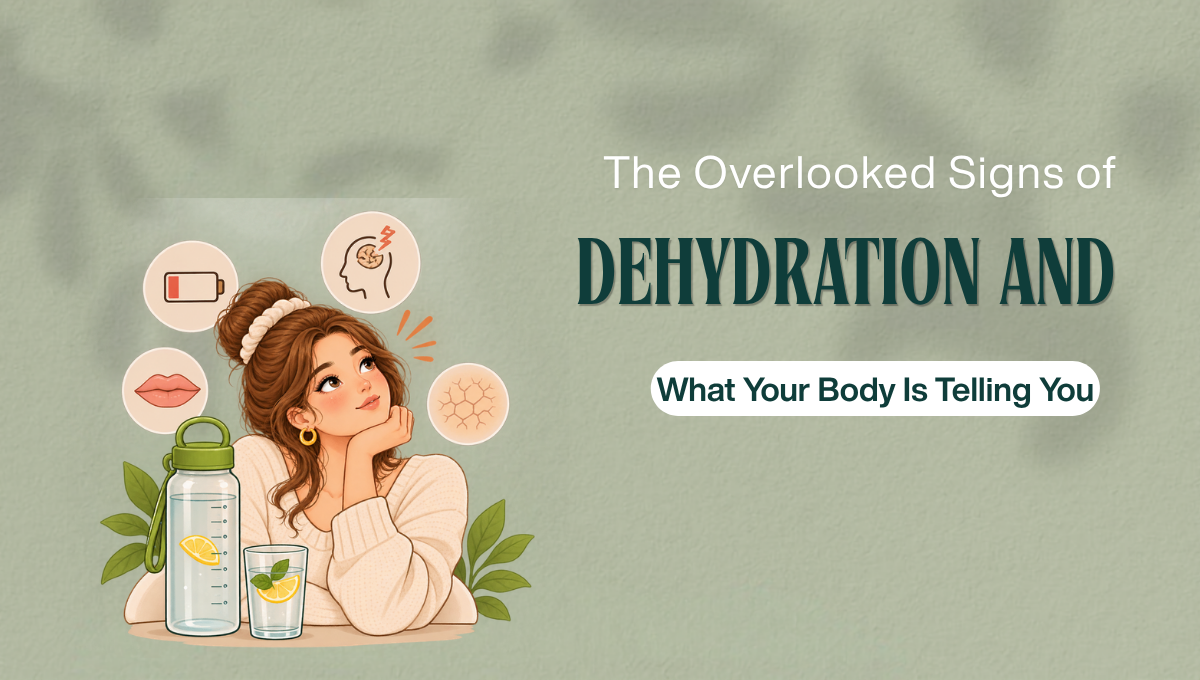
The Overlooked Signs of Dehydration and What Your Body Is Telling You
When people picture dehydration, they imagine a dry mouth, a hot day and an obvious urge to drink. In real life, it’s far quieter. It looks like a 3 pm headache, a foggy afternoon, a sudden craving for sweets or skin that feels tight even after moisturiser.
Many women are running slightly low on fluids without realising it, and blaming sleep, stress or hormones instead. Here are the signs that are easy to miss, why women in particular are prone to them, and what actually helps.
Why thirst isn’t a reliable alarm
Thirst is a late signal. By the time you feel properly thirsty, your body has usually been short on fluid for a while. And it’s not only about severe dehydration. Research suggests even mild dehydration, a fluid loss of around 1 to 2% of body weight, can affect how you feel and function.
In a well-cited study of young women, losing about 1.4% of body weight in fluid (roughly what you’d lose from light exercise or a warm day without drinking) worsened mood, increased headaches, made tasks feel harder and reduced concentration. No dramatic symptoms, just a day that feels off.
10 hidden signs of dehydration women often miss
- Frequent headaches
Dehydration is a recognised headache trigger for some people. If you get dull afternoon headaches, especially on busy days when you forgot to drink, water is worth testing before you reach for a painkiller. - Brain fog and poor focus
Trouble concentrating, forgetfulness and feeling mentally slow can all show up when you’re low on fluids, even mildly. - Fatigue and low energy
When fluid volume drops, circulation and nutrient delivery work harder. Tiredness has many causes, but if you’re exhausted despite enough sleep, check your intake. - Sugar and food cravings
Thirst and hunger signals can feel similar. If you crave snacks soon after a full meal, try a glass of water and wait ten minutes. This doesn’t explain all cravings, but it’s a simple test. - Dark urine or infrequent urination
This is the easiest check you have. Pale straw-colored urine is generally a good sign. Dark yellow or amber usually means you need more fluids. (Note that some vitamins, especially B-complex, can turn urine bright yellow, and certain medicines and foods can change color too.) - Dry skin, dry lips and dull complexion
Skin has a water component, and dehydration can make it look tight, flaky or dull. Creams help the surface, but they can’t fully replace internal hydration. Skin dryness has many causes, so treat this as one clue among several. - Constipation
The colon pulls water from stool. If you’re not getting enough fluid along with fiber, stools become harder and passing them gets uncomfortable. If you’ve increased fiber but not water, this is a common reason it backfires. - Dizziness when standing up
Low fluid volume can lower blood pressure slightly, making you feel lightheaded when you stand quickly. - Mood dips and irritability
Studies in both men and women have linked mild dehydration to lower mood and higher tension. If you feel snappy or low for no clear reason, hydration is an easy thing to check. - Muscle cramps and a racing heart
Fluid and electrolyte shifts (sodium, potassium, magnesium) can contribute to cramps and, sometimes, a faster heartbeat. Persistent palpitations always need medical attention, so don’t assume water is the answer.
Why women are especially prone to missing it
Hormonal shifts. Fluid balance can change across the menstrual cycle. Some women notice more thirst, puffiness or headaches around their periods, when body water handling is affected by hormones.
Pregnancy and breastfeeding. Needs rise noticeably. Common guidelines suggest adding roughly 300 ml a day during pregnancy and around 700 ml during breastfeeding, on top of normal intake.
Busy routines. Many women, especially working professionals and caregivers, put everyone else first and forget to drink. Some also avoid drinking to avoid frequent bathroom breaks, at work, while traveling or in public places.
Air conditioning and indoor heating. You may not feel sweaty, but dry indoor air still increases fluid loss through skin and breathing.
Heavy periods. Blood loss increases fluid and iron needs.
Diets that cut out water-rich foods or rely heavily on dry snacks, tea and coffee.
Does tea and coffee count?
Yes, mostly. Caffeinated drinks contribute to your fluid intake, and the mild diuretic effect in regular drinkers is small. But if your day is mostly chai and coffee with very little plain water, your intake can still fall short, and heavy caffeine can worsen sleep, which affects hydration habits and cravings. Aim for water as your main drink.
How much should you drink?
There’s no single number for everyone. A commonly cited guide for total fluid intake, including food and beverages, is around 2.7 litres a day for women (about 20% of that typically comes from food). Your needs go up with heat, humidity, exercise, illness, pregnancy and breastfeeding.
A simpler guide: drink enough that your urine stays pale yellow, and you’re rarely thirsty. For most healthy women that’s roughly 1.5 to 2.5 litres of fluids a day, adjusted for climate and activity.
Practical ways to stay hydrated
Drink a glass of water when you wake up. After 7 to 8 hours without fluids, it’s an easy first win.
Keep a bottle in sight. Visibility beats willpower. If you work at a desk, keep it next to your keyboard.
Link water to habits. A glass after brushing, one with each meal, one before each chai.
Eat your water. Cucumber, watermelon, muskmelon, oranges, tomatoes, lauki, curd and buttermilk all add fluid and nutrients.
Use flavor if plain water bores you. Lemon, mint, jeera water, coconut water or fruit-infused water are good options, without piling on sugar.
Add electrolytes when needed. In hot weather, heavy sweating, or after stomach illness, nimbu pani with a pinch of salt and some sugar, ORS, buttermilk or coconut water replaces both fluid and salts.
Sip steadily. Several small drinks through the day work better than chugging a litre at once.
Increase fluids along with fiber. If you’re eating more vegetables, dals or whole grains, drink more too.
Can you drink too much?
Yes, though it’s uncommon. Drinking very large amounts of plain water in a short time, especially during long endurance exercise, can dilute blood sodium (hyponatremia). For everyday life, steady drinking guided by thirst and urine color is safe for most people. If you have kidney, heart or liver conditions, or take medications affecting fluid balance, follow your doctor’s guidance on fluids.
When to see a doctor
Dehydration-like symptoms that don’t improve with fluids need checking. See a doctor if you have:
- Constant extreme thirst or very frequent urination (could point to blood sugar problems)
- Persistent dizziness, fainting or a racing heart
- Very dark urine that doesn’t clear with more fluids
- Little or no urine for a day
- Severe vomiting or diarrhea lasting more than a day or two
- Confusion or extreme weakness
The takeaway
Dehydration doesn’t always look like thirst. Often, it looks like a headache, a slow brain, a sugar craving or a low mood. For women juggling busy days, hormonal changes and long hours indoors, small hydration gaps add up quickly.
Check your urine color, drink water before you feel thirsty, eat water-rich foods and keep a bottle where you can see it. Small, steady habits make the biggest difference.