
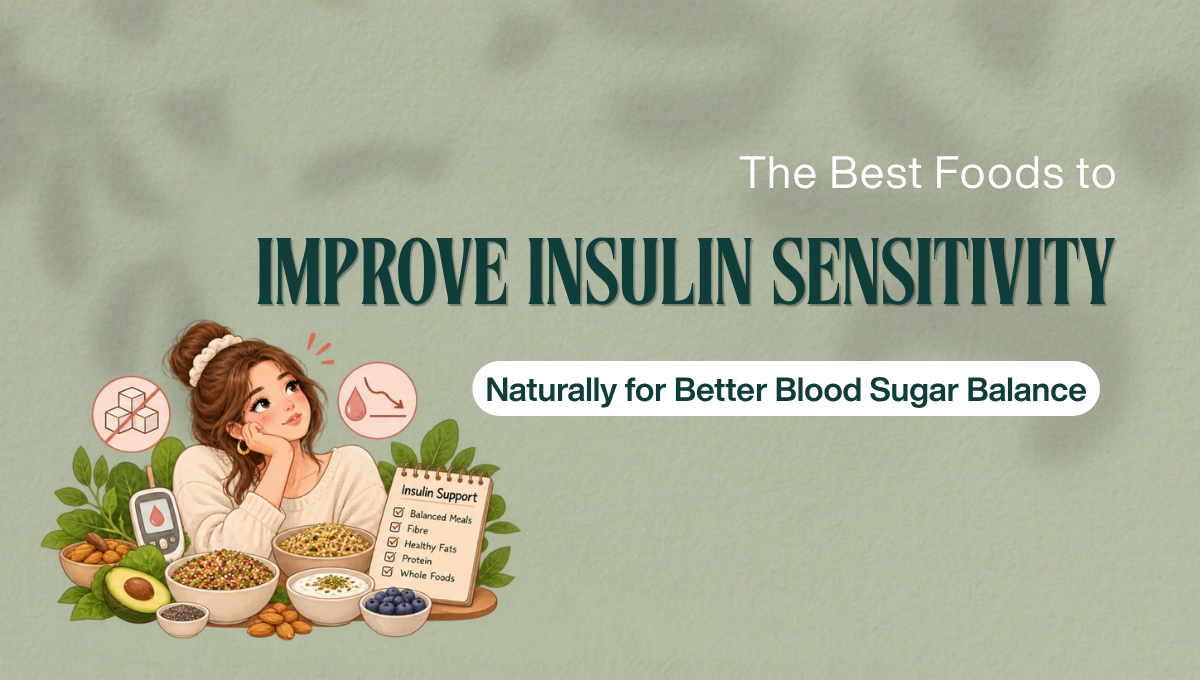
The Best Foods to Improve Insulin Sensitivity Naturally for Better Blood Sugar Balance
Tired after lunch. Hungry again two hours after eating. Cravings for sweets that feel impossible to ignore. Belly fat that doesn’t respond to dieting.
These are common signs that your body may be struggling to respond to insulin efficiently, a state called insulin resistance. And it’s more common in India than most people realise. The ICMR-INDIAB study estimated that over 15% of Indian adults have prediabetes, and over 11% have diabetes.
The encouraging part: food, along with movement and sleep, can meaningfully influence how your body handles sugar. Here’s what the evidence supports, and how to use it in an Indian kitchen.
First, what insulin sensitivity actually means
Insulin is the hormone that helps move glucose from your blood into your cells. When your cells respond well, you need less insulin and your blood sugar stays steadier. This is good insulin sensitivity.
When cells respond poorly, the body produces more insulin to compensate. Over time this can mean energy crashes, stronger cravings, weight gain around the waist and, eventually, higher risk of type 2 diabetes. It’s also closely linked with PCOS and fatty liver.
Food can’t replace medical care, but it’s one of the most practical tools you have for blood sugar control.
The best foods to improve insulin sensitivity
- High fiber foods: dals, rajma, chana, sprouts
Legumes combine protein, fiber and slow-digesting carbs, so they release glucose gradually. They also keep you full for hours. Aim to include one serving of dal or legumes in at least two meals a day. Soaked and sprouted versions are especially good. - Leafy greens: palak, methi, sarson, amaranth
Greens are low in calories, high in fiber and rich in magnesium, a mineral involved in how your body uses insulin. Low magnesium intake is repeatedly linked with poorer insulin function in research. Add greens to dal, rotis, chillas and sabzis. - Millets: ragi, jowar, bajra
Compared to polished white rice and refined flour, millets generally digest more slowly and contain more fiber. Swapping some rice or maida-based meals for millet-based ones is one of the simplest changes you can make. Start with one meal a day. - Nuts and seeds: almonds, walnuts, flax, chia, pumpkin seeds
Healthy fats and fiber blunt the glucose rise from a meal and support fullness. They’re also good sources of magnesium. Keep portions modest, around a small handful a day, since they’re calorie-dense. - Non-starchy vegetables: bhindi, lauki, cabbage, cauliflower, bitter gourd, tomatoes
They add volume and fiber with very little effect on blood sugar. Half your plate should ideally be vegetables. - Berries and whole fruits: jamun, guava, apple, orange
Whole fruits come with fiber, so they affect blood sugar far less than juice. Jamun, in particular, is a traditional favorite, though research on it is still limited. Avoid fruit juices and have the whole fruit instead. - Protein-rich foods: eggs, paneer, curd, fish, tofu
Protein slows digestion and reduces the glucose spike of a meal. Fatty fish like salmon, sardines and mackerel also provide omega-3 fats, which are linked with better metabolic health. - Fermented foods: curd, buttermilk, idli and dosa batter
Fermented foods support gut bacteria, and gut health is increasingly connected with how the body manages blood sugar. Plain, unsweetened curd is the easiest daily option. - Spices with some supporting evidence: methi seeds, cinnamon, turmeric
Fenugreek seeds (methi dana) have shown modest benefits for blood sugar in several small trials. Evidence for cinnamon is mixed. Use these as flavorful additions to meals, not as treatments or replacements for medication. - Cooled starches: rice or potatoes cooked and cooled
When rice or potatoes are cooked and then cooled, part of their starch turns into resistant starch, which digests more slowly. Leftover rice, reheated, can have a lower glucose impact than freshly cooked. The effect is modest, so portion size still matters.
How you eat matters as much as what you eat
Eat in the right order. Small studies have found that eating vegetables and protein before carbohydrates leads to lower post-meal blood sugar than eating carbs first. Start with salad or sabzi, then dal or paneer, then roti or rice.
Don’t eat carbs alone. Roti with sabzi and dal is better than roti with tea. Fruit with nuts is better than fruit alone.
Add a little vinegar or lemon. Some studies suggest small amounts of vinegar before a carb-rich meal can modestly reduce the glucose rise. Lemon juice on salads and dal is an easy, tasty option. Don’t drink undiluted vinegar.
Walk after meals. A 10 to 15 minute walk after eating helps your muscles use glucose and can lower post-meal blood sugar. This is one of the most effective, free habits there is.
Keep portions sensible. Even healthy carbs raise blood sugar if the portion is very large.
What to cut back on
- Sugary drinks, packaged juices and sweetened chai in large quantities
- Refined flour products: white bread, maida snacks, bakery items
- Deep-fried snacks and processed foods eaten frequently
- Large portions of white rice without protein or vegetables
- Skipping meals, then overeating late at night
You don’t need to eliminate these forever. Reducing how often you eat them does most of the work.
Lifestyle factors that support the food
- Sleep: Even a few nights of short sleep can reduce insulin sensitivity. Aim for 7 to 9 hours.
- Strength training: Muscle uses a large amount of glucose. Two to three sessions a week helps.
- Stress: Chronic stress raises cortisol, which can push blood sugar up.
- Body weight: For many people, losing even a modest amount of excess weight improves insulin sensitivity noticeably.
A sample day of eating
- Breakfast: Besan chilla with vegetables and curd
- Lunch: Salad, then dal, sabzi, one multigrain roti and a small bowl of rice
- Snack: Roasted chana or a handful of almonds with an apple
- Dinner: Grilled fish or paneer with sautéed vegetables and a small ragi roti
- After meals: A short walk
When to see a doctor
If you have symptoms like constant fatigue, excessive thirst, frequent urination, darkening of skin around the neck or underarms, or a family history of diabetes, get your fasting glucose, HbA1c and ideally fasting insulin checked. If you’re on medication, don’t change your diet drastically without medical advice.
The takeaway
Improving insulin sensitivity isn’t about one magic food. It’s about building meals around fiber, protein and healthy fats, choosing slower carbs over refined ones, and pairing good food with movement and sleep.
Start with one change this week: add a serving of dal or sprouts to lunch, or take a 10 minute walk after dinner. Small, repeatable habits are what move the numbers.