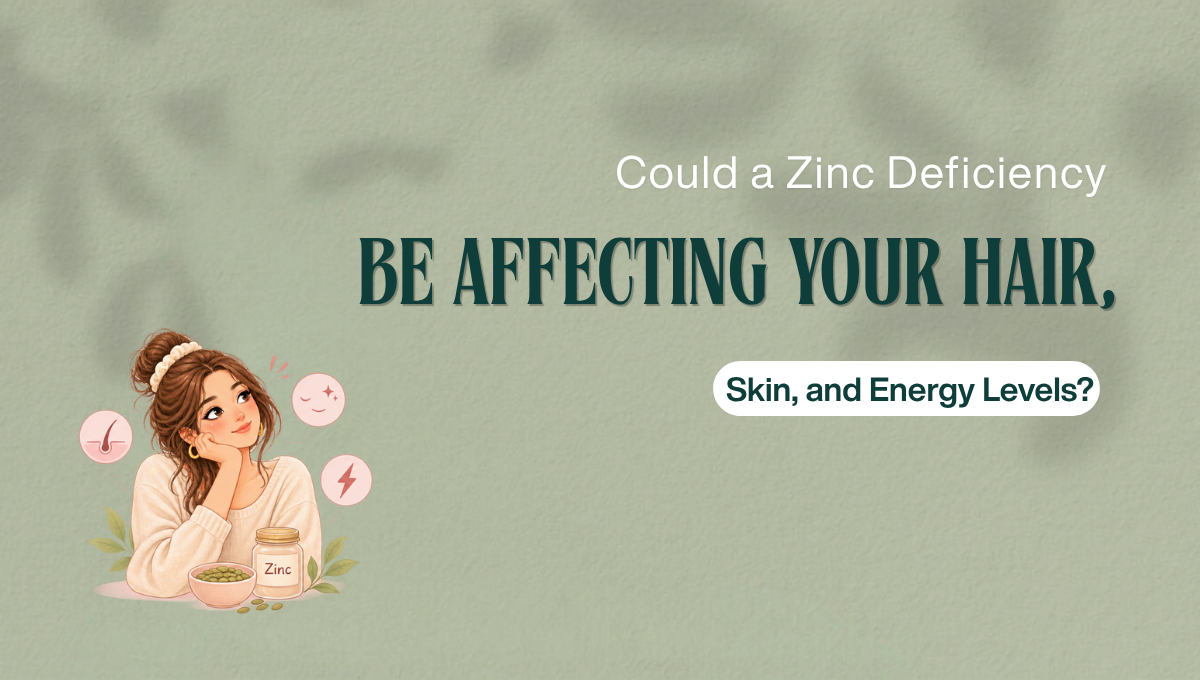
Could a Zinc Deficiency Be Affecting Your Hair, Skin, and Energy Levels?
Your hair is thinning, your skin heals slowly, you catch every cold going around, and you feel tired despite sleeping enough. Most people go looking for a single cause. Sometimes, a small mineral you’ve never thought about is part of the picture.
Zinc deficiency is one of the more overlooked nutrient gaps, especially in plant-heavy diets. Global estimates suggest that around 1 in 6 people worldwide may not get enough zinc, with higher rates in parts of South Asia. Here’s what zinc does, how to tell whether yours might be low, and how to fix it through food first.
Why zinc matters so much
Zinc is a trace mineral, meaning you only need small amounts. But it’s involved in hundreds of enzyme reactions in the body. It supports cell growth and repair, protein and DNA production, wound healing, hormone function, taste and smell, and the immune system.
Your body can’t store zinc in large reserves, so you need a regular supply from food. India’s ICMR-NIN guidelines suggest roughly 10 mg a day for adult women and 12 mg for adult men, with higher needs during pregnancy and breastfeeding.
How low zinc can affect your hair
Hair follicles are among the fastest-dividing cells in the body, which makes them sensitive to nutrient shortages. Low zinc has been linked with hair fall, particularly a diffuse thinning pattern called telogen effluvium, where more hairs than usual shift into the shedding phase.
Studies have found lower zinc levels in some people with hair loss conditions. But hair loss has many causes: iron deficiency, thyroid problems, hormonal changes, stress, crash diets, PCOS and genetics. Zinc is one possible factor, not the default explanation.
How it can show up on your skin
Zinc plays a role in skin repair, oil regulation and inflammation control. Possible signs of low zinc include:
- Slow wound healing
- Dry, rough or flaky skin
- Recurring acne or breakouts
- Rashes, especially around the mouth, hands or feet in more severe deficiency
- Brittle nails or white spots on nails
These signs are not specific to zinc and can come from many other causes, so treat them as clues, not proof.
Why it can affect your energy and mood
Zinc doesn’t give you energy directly the way carbs do, but it supports the metabolic processes, thyroid hormone function and immune activity your body depends on. Low levels may contribute to fatigue, low mood, poor concentration and getting sick more often. Again, fatigue has dozens of potential causes, including low iron, B12, vitamin D, poor sleep, stress and thyroid problems.
Other possible signs of low zinc
- Reduced sense of taste or smell
- Frequent colds or infections
- Loss of appetite
- Diarrhea that lingers
- Poor growth or delayed puberty in children and adolescents
Who is more likely to be low
- Vegetarians and vegans. Meat and seafood are the most absorbable zinc sources, and plant foods contain phytates, compounds in grains, legumes, nuts and seeds that bind zinc and reduce how much you absorb. Some research suggests vegetarians may need up to 50% more zinc than meat eaters.
- People with digestive conditions such as chronic diarrhea, celiac disease or inflammatory bowel disease.
- Pregnant and breastfeeding women, who need more.
- Heavy drinkers, because alcohol reduces absorption and increases zinc loss.
- People on restrictive or crash diets.
- Older adults, who often eat less and absorb less.
- People with prolonged stress, which can raise demand for the mineral.
Zinc-rich foods in an Indian diet
Plant sources (good for vegetarians):
- Pumpkin seeds (among the richest plant sources)
- Sesame seeds (til), including in chikki and chutneys
- Chickpeas, rajma, lentils and other legumes
- Cashews, almonds and peanuts
- Whole grains such as wheat, bajra and ragi
- Curd, milk and paneer
Animal sources (more absorbable):
- Eggs
- Chicken and mutton
- Fish and seafood (oysters are exceptionally high)
How to absorb more of the zinc you eat
Eating zinc-rich foods is only half the job. These tricks improve absorption from plant foods:
Soak, sprout or ferment. Soaking dals and legumes, sprouting grains, and fermenting batter for idli and dosa all reduce phytates and make zinc more available. Traditional Indian cooking methods are quietly doing a lot of work here.
Pair with protein. Protein-rich foods help zinc absorption, so mix legumes, dairy or eggs into meals.
Include sulfur-rich foods like garlic and onions, which may support absorption.
Watch what you take with it. High-dose iron or calcium supplements, taken at the same time as zinc, can compete for absorption. Space them out.
Limit excess tea and coffee around mineral-rich meals. Polyphenols can slightly reduce mineral absorption.
A sample zinc-supportive day
- Breakfast: Besan chilla with vegetables and a bowl of curd, plus a spoon of pumpkin seeds
- Lunch: Dal or rajma, mixed vegetable sabzi, one multigrain roti, salad
- Snack: Roasted chana and a handful of cashews or almonds
- Dinner: Egg curry or paneer with vegetables and a small portion of rice or ragi roti
Should you take a zinc supplement?
Not automatically. More is not better. Zinc has an upper limit of about 40 mg a day for adults (as set by many health authorities), and taking too much for too long can cause nausea, stomach upset and, importantly, copper deficiency, which can lead to anemia and nerve problems.
A supplement may make sense if a doctor confirms low zinc or if you’re in a high-risk group, but the dose and duration should come from a professional. Food first is the safest starting point.
How to find out if you’re actually low
A blood test for serum zinc is available, though it has limits: levels can fluctuate and don’t always reflect the body’s total stores. Doctors usually interpret results alongside symptoms, diet and other tests such as iron, ferritin, B12, vitamin D and thyroid markers. If you have persistent hair loss, skin problems or fatigue, a full check-up is more useful than guessing.
The takeaway
Zinc may be one piece of the puzzle behind thinning hair, stubborn skin issues and low energy, especially for vegetarians and people with limited variety in their diets. But it’s rarely the only piece.
Start with food: seeds, legumes, nuts, dairy, eggs and well-prepared whole grains. Use soaking and sprouting to get more from what you eat. And if symptoms continue, get tested instead of self-treating.