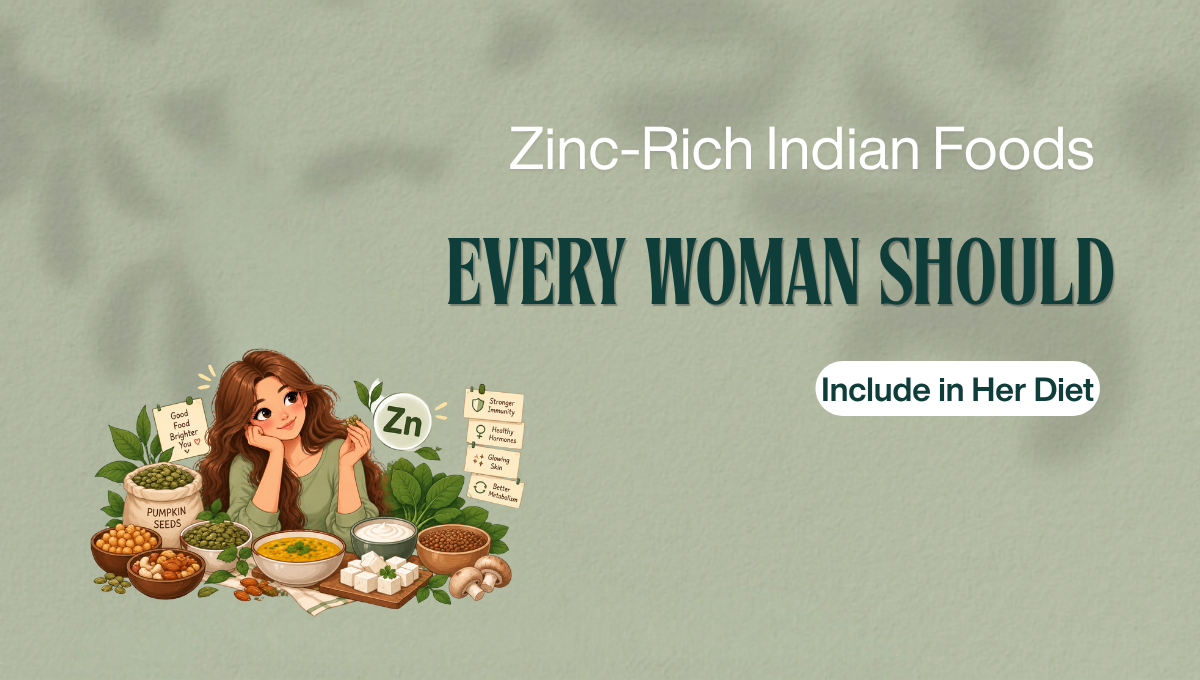
Zinc-Rich Indian Foods Every Woman Should Include in Her Diet
Zinc is one of those nutrients that rarely gets the attention it deserves.
We often hear about iron, vitamin D, B12 and calcium when discussing women’s nutrition, but zinc is equally important for several essential processes in the body. It is involved in immune function, protein and DNA synthesis, wound healing, cell division and normal growth and development.
And the good news? You don’t need exotic superfoods to get zinc. A well-planned Indian diet can provide zinc through dal, beans, chickpeas, seeds, nuts, whole grains, dairy, eggs and other protein-rich foods. The key is knowing which foods contribute meaningfully and how to build meals around them.
How Much Zinc Do Women Need?
For adult women, the recommended dietary allowance for zinc is generally 8 mg per day. Requirements increase during pregnancy and breastfeeding.
This doesn’t mean you need to calculate every milligram. Instead, aim to regularly include different zinc-containing foods throughout your diet. For women following vegetarian or predominantly plant-based diets, this becomes especially important because zinc from plant foods is generally less bioavailable than zinc from many animal foods.
1. Pumpkin Seeds
Pumpkin seeds are one of the easiest ways to add more zinc to your diet.
They’re also useful because they provide protein, healthy fats and other minerals.
Add them to:
- Overnight oats
- Homemade trail mixes
- Curd bowls
- Salads
- Smoothie bowls
- Chia or seed mixes
You don’t need a huge handful. A small serving can complement an otherwise balanced diet.
2. Chickpeas
Chickpeas are a practical Indian staple and provide both zinc and plant protein.
Think beyond plain chana.
Try:
Chana chaat + vegetables + lemon
Chickpea salad + curd
Chole + roti + vegetable sabzi
Hummus + whole-grain roti or toast
The bigger nutrition win is combining chickpeas with other nutrient-dense foods rather than treating them as an isolated “zinc food.”
3. Lentils and Dal
Your everyday dal can contribute to zinc intake while also providing protein and fibre.
Masoor, moong, chana dal and other pulses can easily become part of a zinc-supportive diet.
A simple meal such as:
Dal + roti + sabzi + curd
can provide a much broader nutritional profile than focusing on a single nutrient.
NIH data also lists boiled lentils among foods that provide zinc.
4. Sesame Seeds
Sesame seeds can be an easy addition to Indian meals.
Use them in:
- Til chutney
- Sesame vegetable stir-fries
- Homemade seed mixes
- Salads
- Laddoos in controlled portions
- Sprinkle over cooked vegetables
They’re particularly useful for women who don’t eat many animal foods and want to diversify their plant-based mineral sources.
5. Nuts and Peanuts
Nuts and peanuts contain zinc, although they’re better viewed as nutrient-dense additions rather than your sole zinc source.
Add peanuts to poha, salads or chaat, or use a small serving of mixed nuts as a snack.
Remember that nuts and seeds are energy-dense, so portion size still matters if you’re managing overall calorie intake.
6. Dairy and Eggs
If you consume animal foods, dairy and eggs can make it easier to build a varied diet containing zinc.
Milk, curd, paneer and eggs can fit into meals alongside pulses, whole grains, vegetables and fruit. Dairy products and eggs are recognised sources of zinc.
For example:
Besan chilla + paneer filling + vegetables
or
Egg bhurji + whole-grain roti + vegetable salad
gives you a more complete meal than simply adding a zinc supplement.
The Part Most People Miss: Zinc Absorption
Eating a zinc-containing food doesn’t automatically mean your body absorbs all of its zinc.
Many plant foods contain phytates, compounds that can bind minerals such as zinc and reduce absorption. This is particularly relevant to diets that rely heavily on legumes and whole grains.
This doesn’t mean you should stop eating dal, beans or whole grains.
Instead, food preparation matters.
Soaking legumes, grains and seeds before cooking can help reduce phytate content. Fermentation may also improve mineral bioavailability.
Traditional Indian food preparation methods can therefore be nutritionally useful, not just culturally familiar.
Don’t Build Your Diet Around Zinc Alone
This is where nutrition gets more interesting.
If you’re trying to improve your zinc intake, don’t simply add pumpkin seeds to an otherwise poor diet.
Build meals around protein + fibre + whole-food carbohydrates + healthy fats.
For example:
Breakfast: Moong dal chilla + curd + vegetables
Lunch: Rajma + rice + salad + curd
Snack: Fruit + small portion of nuts/seeds
Dinner: Dal + roti + sabzi + paneer/egg, depending on preference
This approach helps you improve your overall nutrient intake rather than chasing one mineral.
Should Women Take a Zinc Supplement?
Not necessarily.
Food should generally be the starting point, and supplements are most useful when there is a genuine need or a healthcare professional recommends them.
More zinc is not automatically better. Excessive zinc intake, particularly from high-dose supplements over time, can interfere with copper absorption and cause other adverse effects. The adult upper limit is 40 mg per day from all sources unless medically directed otherwise.
If you’re concerned about zinc deficiency, don’t rely on symptoms alone. Discuss your diet, risk factors and appropriate testing with a qualified healthcare professional.
The Takeaway
Zinc doesn’t require an expensive “wellness” food. Your Indian kitchen already has plenty of useful options. Dal. Chickpeas. Peanuts. Seeds. Whole grains. Dairy. Eggs.
The goal isn’t to find one magical zinc-rich food. It’s to build a varied, protein-rich and nutrient-dense diet that regularly includes several zinc-containing foods. For women, especially those following vegetarian or predominantly plant-based diets, being intentional about food variety and preparation can make a meaningful difference to overall nutrient adequacy.
Eat a diverse diet first. Supplement with purpose, not assumption.