
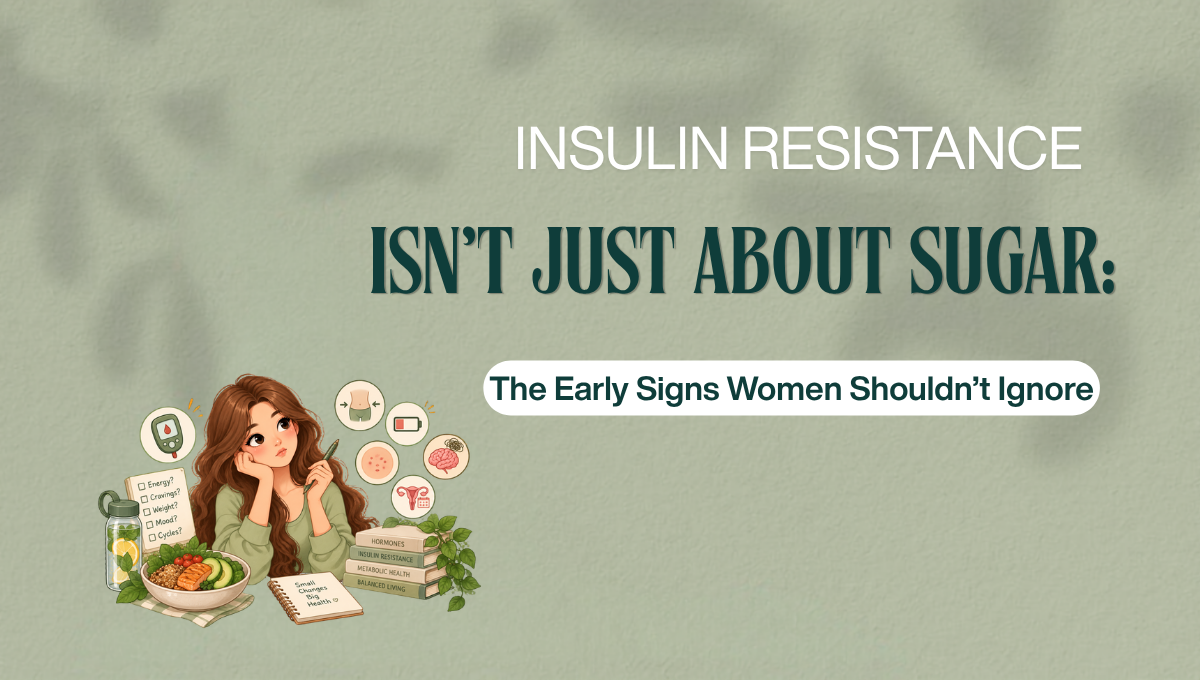
INSULIN RESISTANCE ISN’T JUST ABOUT SUGAR: The Early Signs Women Shouldn’t Ignore
You might think insulin resistance is something that only matters if you have diabetes or eat too much sugar. But insulin resistance can develop gradually, often without obvious symptoms, and it can affect metabolic and hormonal health long before blood sugar becomes high enough to meet the criteria for diabetes.
For women, the picture can be even more complicated because insulin resistance can overlap with conditions such as polycystic ovary syndrome (PCOS), changes in body composition, pregnancy-related metabolic changes and other hormonal concerns.
So what exactly is insulin resistance, and what are the early signs of insulin resistance in women that deserve attention?
What Is Insulin Resistance?
Insulin is a hormone produced by your pancreas. After you eat, carbohydrates are broken down into glucose, which enters your bloodstream. Insulin helps move that glucose from your blood into cells, where it can be used for energy.
With insulin resistance, your muscle, fat and liver cells become less responsive to insulin. Your pancreas may compensate by producing more insulin to keep blood glucose within a normal range. Over time, however, this compensation may become less effective, causing blood glucose levels to rise and increasing the risk of prediabetes and type 2 diabetes.
The important part?
Insulin resistance can exist before noticeable high blood sugar develops.
That means waiting for an abnormal blood sugar result or diabetes symptoms isn’t always the best approach.
1. You’re Hungry Again Soon After Eating
One possible clue is feeling hungry shortly after meals, particularly when your meals are mostly refined carbohydrates and lack enough protein, fibre or healthy fats.
However, frequent hunger does not automatically mean you have insulin resistance. Sleep deprivation, stress, restrictive dieting, inadequate calorie intake and highly palatable foods can also influence appetite.
Instead of focusing on one symptom, look at the bigger pattern.
Are your meals actually keeping you satisfied?
A balanced meal containing protein + fibre-rich carbohydrates + vegetables + healthy fats is generally more supportive of steady energy and appetite than a meal dominated by refined carbohydrates.
2. Weight Gain Around the Abdomen
Changes in body composition, particularly increased abdominal or visceral fat, are associated with a higher risk of insulin resistance.
But here’s something important: insulin resistance is not a condition that only affects people in larger bodies.
Body size alone cannot tell you whether someone is insulin resistant. Genetics, physical activity, age, family history, metabolic health and other factors also influence risk.
This is why using weight as the only marker of metabolic health can be misleading.
Instead, think beyond the scale.
3. You Have PCOS or Signs of Hormonal Imbalance
The connection between insulin resistance and PCOS is particularly important for women.
Insulin resistance is common in women with PCOS and is closely linked with the metabolic side of the condition. PCOS can also be associated with irregular menstrual cycles, acne, excess facial or body hair and hair thinning.
If you have PCOS, it doesn’t mean you automatically have diabetes.
But it does mean metabolic health deserves attention.
Rather than focusing only on reproductive symptoms, it can be useful to discuss blood glucose, blood pressure, lipids, physical activity, nutrition and other metabolic risk factors with your healthcare professional.
4. You Feel Tired or Sluggish After Meals
Feeling sleepy or sluggish after eating is often blamed on carbohydrates.
But it’s not that simple.
Meal size, sleep quality, the composition of your meal, your usual activity levels and your overall eating pattern can all affect how you feel after eating.
If you’re repeatedly experiencing significant fatigue after meals alongside other metabolic risk factors, it’s worth looking at the overall picture rather than simply eliminating carbohydrates.
Carbohydrates are not the enemy.
The goal is to build meals that provide adequate protein, fibre and minimally processed carbohydrate sources while keeping portions appropriate for your individual needs.
5. You’re Finding Weight Loss Increasingly Difficult
Difficulty losing weight is often labelled as a “slow metabolism,” but metabolism is far more complex than that.
Insulin resistance can be associated with changes in glucose regulation and metabolic health, but struggling with weight loss does not diagnose insulin resistance.
Your calorie intake, appetite, sleep, stress, activity, muscle mass, medications, hormones and genetics can all influence body weight.
Instead of responding by drastically cutting calories, start by asking better questions:
- Am I eating enough protein?
- Am I getting enough fiber?
- Are most of my carbohydrates minimally processed?
- Am I moving regularly?
- Am I doing resistance training?
- Am I sleeping adequately?
- Am I consistently overeating because I am restricting too aggressively?
This approach is much more useful than simply eating less.
6. You Have a Family History of Type 2 Diabetes
Genetics matter.
Having a parent or sibling with type 2 diabetes can increase your risk of prediabetes and type 2 diabetes. Other important risk factors include physical inactivity, overweight or obesity, previous gestational diabetes and certain hormonal conditions such as PCOS.
A family history doesn’t mean diabetes is inevitable.
It means prevention and early screening may be especially valuable.
7. You’ve Had Gestational Diabetes
For women, pregnancy can provide important information about future metabolic health.
Having had gestational diabetes increases the risk of developing type 2 diabetes later. PCOS, previous gestational diabetes and prediabetes are among the factors that can increase metabolic risk.
If this applies to you, regular follow-up with your healthcare professional can be an important part of long-term health.
But Here’s the Problem: Insulin Resistance Often Has No Clear Symptoms
This is one of the most important things to understand.
You cannot reliably diagnose insulin resistance based on how you feel.
In fact, prediabetes can exist for years without obvious symptoms, which is why people can discover it only after blood testing.
That’s why symptoms should be treated as clues, not a diagnosis.
Depending on your individual risk factors, a healthcare professional may assess blood glucose using tests such as A1C, fasting plasma glucose or an oral glucose tolerance test.
What Can You Do to Support Insulin Sensitivity?
The answer isn’t to completely eliminate carbohydrates or follow an extreme “insulin resistance diet.”
Focus on the fundamentals.
Build balanced meals
Pair carbohydrates with protein, fibre and healthy fats rather than eating carbohydrate-heavy meals on their own.
Prioritise protein
Include protein sources such as eggs, dairy, fish, chicken, tofu, soy, lentils, beans and other pulses according to your dietary preferences.
Increase fibre
Vegetables, fruits, pulses, whole grains, nuts and seeds can help you build a more nutrient-dense eating pattern.
Move after meals
A short walk after eating can be a simple way to increase daily movement and support blood glucose management.
Strength train
Building and maintaining muscle is important for metabolic health because skeletal muscle plays an important role in glucose disposal.
Don’t ignore sleep
Poor sleep can affect appetite, energy, food choices and metabolic health. Sleep should be part of the strategy, not an afterthought.
Focus on consistency
You don’t need a perfect diet to improve your health. Regular movement, balanced meals, adequate sleep and sustainable weight management, when appropriate, can all contribute to better metabolic health.
The Takeaway
Insulin resistance in women isn’t simply a “sugar problem.”
It is a metabolic issue that can interact with body composition, physical activity, genetics, PCOS, pregnancy history and overall lifestyle.
And because early insulin resistance may have few or no obvious symptoms, you shouldn’t wait until you feel unwell to pay attention to your metabolic health.
If you have several risk factors, persistent symptoms or a family history of type 2 diabetes, speak with a healthcare professional about whether blood glucose testing is appropriate for you.
The goal isn’t to fear carbohydrates, obsess over every blood sugar reading or follow another restrictive diet.
It’s to understand your metabolic health early and build habits that support it for the long term.