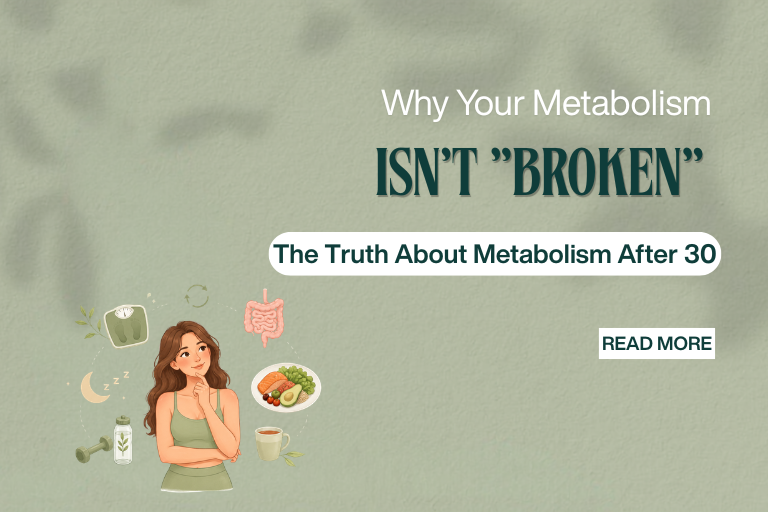
Why Your Metabolism Isn’t “Broken”: The Truth About Metabolism After 30
You hit your 30s and suddenly nothing works the way it used to.The same food. The same routine. A completely different body. The weight starts creeping up. Your energy dips. And everyone around you says the same thing:
“It’s your metabolism. It slows down after 30.”
So you eat less, exercise more, try every trending diet, and still feel stuck. Here’s what most people don’t realise: your metabolism probably isn’t broken. It simply needs a different approach than what you’ve been trying.
What Is Metabolism?
Metabolism is the collection of processes your body uses to convert food into energy and keep you alive.
It has three major components:
1. Basal Metabolic Rate (BMR)
This is the energy your body burns at complete rest to perform essential functions like breathing, circulating blood, regulating body temperature, and keeping your organs functioning.
BMR accounts for roughly 60-70% of your total daily calorie expenditure.
2. Thermic Effect of Food (TEF)
Your body burns calories digesting, absorbing, and processing food.
Among all macronutrients, protein has the highest thermic effect, meaning your body uses more energy digesting protein than it does carbohydrates or fats.
3. Physical Activity
This includes both:
- Structured exercise
- Everyday movement like walking, climbing stairs, standing, cooking, cleaning, and even fidgeting
When people say they have a “slow metabolism,” they’re usually referring to a lower-than-expected calorie burn. But age alone is rarely the whole story.
Does Metabolism Actually Slow Down After 30?
Not nearly as much as you’ve probably been told.
Large studies suggest that metabolism remains relatively stable throughout adulthood until around age 60, after accounting for body size and body composition.
So why do so many people struggle after turning 30?
Because several lifestyle and physiological changes begin to accumulate.
Muscle loss
Without regular resistance training, we gradually lose muscle mass over time. Since muscle is more metabolically active than fat tissue, losing muscle can reduce the number of calories your body burns at rest.
Hormonal changes
Changes in estrogen, progesterone, thyroid hormones, insulin sensitivity, and cortisol can influence appetite, body composition, recovery, and how your body stores energy.
Poor sleep
Many adults begin sleeping less or sleeping poorly due to work, parenting, or stress. Inadequate sleep affects hunger hormones, insulin sensitivity, recovery, and food cravings.
Higher stress
Career responsibilities, finances, caregiving, and daily pressures can keep cortisol elevated for prolonged periods, making healthy habits harder to maintain.
Reduced daily movement
Many people simply move less than they did in their 20s without realising it.
The good news? None of these changes mean your metabolism is permanently damaged. Most can be improved with the right habits.
The Biggest Metabolism Myths, Busted
Myth 1: Eating Less Will Fix It
Eating too little for prolonged periods can cause your body to adapt by reducing energy expenditure, a process known as metabolic adaptation. This is one reason crash diets often lead to rapid initial weight loss followed by frustrating plateaus. The goal isn’t to eat as little as possible. The goal is to create a sustainable calorie deficit while preserving muscle and supporting overall health.
Myth 2: More Cardio Is the Answer
Cardio is fantastic for heart health, endurance, insulin sensitivity, and burning calories. However, strength training plays a much bigger role in preserving and building muscle, which helps support your resting metabolic rate over time. The best long-term approach? Do both.
Myth 3: Certain Foods Dramatically Boost Metabolism
- Green tea.
- Apple cider vinegar.
- Chilli peppers.
While these foods may have a small thermogenic effect, the impact is modest.
What truly supports metabolism over the long term is:
- Eating enough protein
- Maintaining muscle mass
- Staying physically active
- Sleeping well
- Managing stress
There is no magic metabolism-boosting food.
Myth 4: My Body Type Is Just Slow
Genetics do influence metabolism. So do thyroid function, hormones, medications, and body composition. But for most people, “slow metabolism” isn’t a fixed trait.
If you’re experiencing persistent fatigue, unexplained weight gain, irregular periods, or difficulty losing weight despite consistent efforts, it’s worth discussing your symptoms with a healthcare professional instead of assuming your metabolism is simply “slow.”
Myth 5: Skipping Meals Speeds Up Fat Loss
Regularly skipping meals may make it harder to meet your protein and nutrient needs, increase hunger later in the day, and lead to overeating for some people.
A consistent eating pattern that fits your lifestyle is generally easier to sustain and better supports muscle maintenance than repeatedly restricting food.
What Actually Slows Metabolism After 30?
Here are the biggest contributors:
Muscle loss
Less muscle means fewer calories burned at rest.
Chronic dieting
Repeated cycles of aggressive calorie restriction can lead to metabolic adaptation, making continued weight loss more challenging.
Poor sleep
Sleep deprivation disrupts hunger hormones, increases cravings, and reduces insulin sensitivity.
Chronic stress
Long-term stress can affect eating behaviour, recovery, sleep quality, and overall metabolic health.
Low protein intake
Protein helps preserve muscle and has the highest thermic effect of all macronutrients.
Sedentary lifestyle
Sitting for long hours reduces daily movement, often lowering total calorie expenditure more than people realise.
Unaddressed medical conditions
Conditions like hypothyroidism or certain hormonal disorders can affect metabolism and should be evaluated if symptoms suggest an underlying issue.
The Metabolism Booster Most People Ignore: NEAT
You don’t just burn calories during workouts.
You also burn calories through all the small movements you make throughout the day.
This is called NEAT (Non-Exercise Activity Thermogenesis).
It includes:
- Walking around the office
- Taking the stairs
- Standing while working
- Cooking
- Cleaning
- Carrying groceries
- Playing with your children
- Even fidgeting
As desk jobs become more common, NEAT often drops dramatically without us noticing.
In some people, increasing daily movement can have just as much impact as adding another workout.
How to Support Your Metabolism After 30
1. Prioritise Protein at Every Meal
Protein supports muscle maintenance and has the highest thermic effect of all macronutrients.
Aim for around 20-30 grams of protein (or more depending on your body size and activity level) for at least 2 meals.
Good Indian protein sources include:
- Paneer
- Eggs
- Greek yogurt or curd
- Soy chunks
- Tofu
- Chicken
- Fish
2. Strength Train Regularly
Resistance training is one of the most effective ways to maintain muscle as you age.
Aim for 2-3 strength training sessions each week, gradually increasing resistance over time.
Exercises like squats, lunges, push-ups, rows, deadlifts, and planks all count.
3. Eat Consistently
Avoid long periods of undereating if they leave you low on energy, constantly hungry, or unable to meet your protein needs.
Consistency is usually more sustainable than cycles of restriction.
4. Prioritize Sleep
Sleep is a metabolic necessity, not a luxury.
Aim for 7-9 hours of quality sleep each night.
To improve sleep quality:
- Reduce screen time before bed
- Keep a consistent sleep schedule
- Limit caffeine late in the day
- Create a calming bedtime routine
5. Move More Throughout the Day
Daily movement matters.
Simple habits include:
- Taking the stairs
- Walking during phone calls
- Standing up every hour
- Parking a little farther away
- Taking a 10-15 minute walk after meals, which may also help support blood sugar control and digestion
6. Manage Stress
Chronic stress affects sleep, eating habits, recovery, and overall health.
Find stress-management strategies that genuinely work for you, such as:
- Yoga
- Meditation
- Breathwork
- Journaling
- Spending time outdoors
- Reading
- Talking with loved ones
Even 10 minutes a day can make a difference when practised consistently.
7. Get the Right Health Checks
If you’ve been consistent with nutrition, exercise, and sleep but still aren’t seeing progress, don’t guess.
Speak with your healthcare provider.
Depending on your symptoms, they may recommend evaluating:
- Thyroid function (TSH, Free T4)
- Blood glucose or HbA1c
- Fasting insulin (when appropriate)
- Iron status
- Vitamin B12
- Vitamin D
- Reproductive hormones if menstrual symptoms or menopause-related concerns are present
The right tests provide clarity and help identify issues that may be affecting your health.
A Metabolism-Supportive Day
You don’t need expensive supplements, detoxes, or extreme diets.
Simple, consistent habits work remarkably well.
Morning
- Hydrate after waking
- Eat a protein-rich breakfast
Mid-morning
- Take a short walk or move around for a few minutes
Lunch
- Include protein, vegetables, whole grains, and healthy fats
- For example: dal, roti, sabzi, and curd
Afternoon Snack
Choose a protein-rich snack such as:
- Roasted chana
- Greek yogurt
- Fruit with peanut butter
- A handful of nuts
Evening
- Strength training, yoga, or a brisk walk
Dinner
Keep it balanced and nourishing rather than extremely heavy or skipping it altogether.
Before Bed
- Limit screens
- Wind down with a relaxing routine
- Aim for 7-9 hours of quality sleep
Remember:
Consistency with simple habits will always outperform intensity with unsustainable ones.
Your Metabolism Isn’t the Problem. Your Strategy Might Be.
If you’ve been eating less and exercising more without seeing the results you expected, it may be time to stop blaming your metabolism and start understanding it.
Your body isn’t working against you.
It simply responds to the habits you repeat every day.
A personalised plan that considers your nutrition, activity, sleep, stress, and—when appropriate—your health markers will take you much further than the latest diet trend.
Small, sustainable changes build a healthier metabolism.
Not perfection.
Not punishment.
Just consistency.
Ready to Build a Plan That Actually Works?
If you’re tired of guessing what your body needs and want a personalised approach based on your lifestyle, health, and goals, I’d love to help.
Book a consultation with Nourish by Karisma and let’s build a sustainable strategy that works with your body, not against it.